

-11%
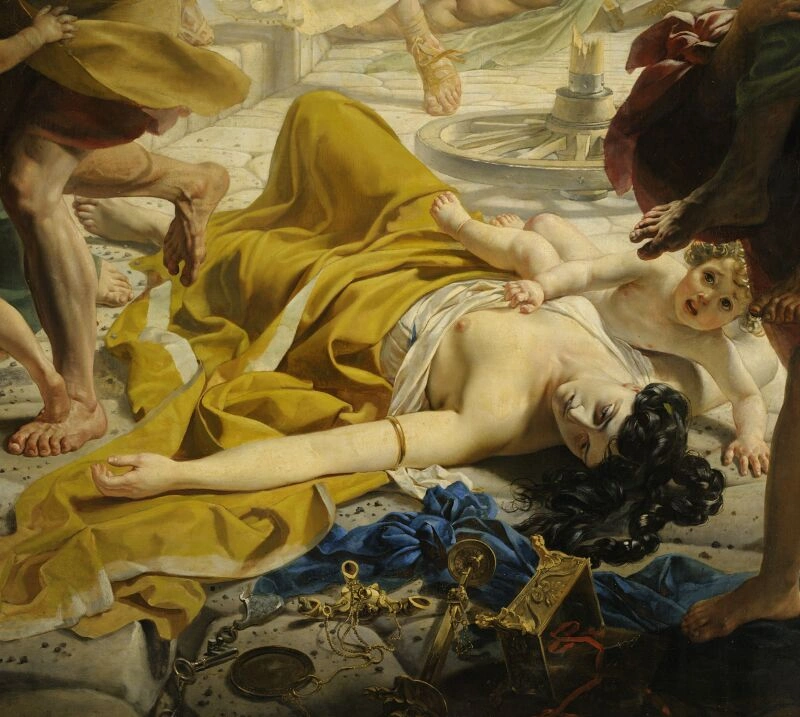
Karl Bryullov’s The Last Day of Pompeii is a historical painting depicting the final stages of the eruption of Mount Vesuvius and the destruction of the city of Pompeii by fire and pyroclastic flow․ It is intense‚ and full of panic and tears: collapsing buildings‚ bolts of lightning‚ smoke‚ and crowds rushing to escape․
In the catalog of the Russian Museum‚ the museum calls The Last Day of Pompeii a monumental historical canvas and one of its greatest masterpieces․ The restoration records give the dimensions of the painting as 456․5 × 651 cm‚ and the museum states that Bryullov worked on it in Italy between 1830 and 1833․
It is not a calm decorative painting․ It is very dramatic‚ cinematic‚ emotional․ Bryullov turns an ancient tragedy into a magnificent picture of horror‚ courage‚ chaos‚ and great human vulnerability․ According to the Russian Museum‚ the painting is a blend of the classical and romantic painting schools and a meaningful milestone of the history of art․
| Field | Product information |
|---|---|
| Product title | The Last Day of Pompeii by Karl Bryullov, 1830–1833 |
| Artist | Karl Bryullov |
| Alternate spelling | Karl Brullov / Karl Briullov |
| Artist dates | 1799–1852 |
| Painting date | 1830–1833 |
| Completion year | 1833 |
| Original medium | Oil on canvas |
| Original size | 456.5 × 651 cm |
| Museum | State Russian Museum, Saint Petersburg |
| Inventory no. | Ж-5084 |
| Artwork type | Historical painting |

Reviews
Clear filtersThere are no reviews yet.