


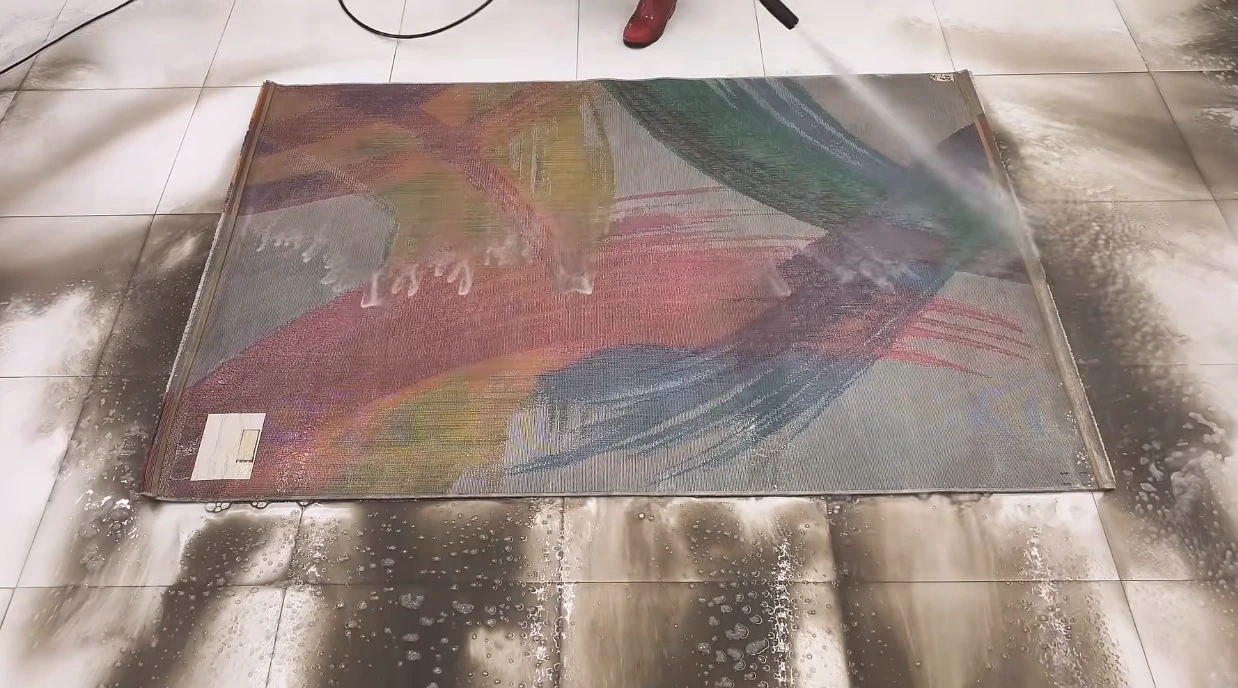
Carpet is four layers. Face fiber on top, then the backing, then the pad, then your subfloor. A spill reaches all four in under a minute, and almost everything sold as a carpet cleaner only works on the first one, which is the reason stains come back after you were sure you had dealt with them.
Blot a Fresh Spill Within 60 Seconds
Liquid runs down the yarn by gravity, so every minute you wait moves the problem into another layer. Blot, never rub. Rubbing spreads the spill sideways into clean carpet, and it opens up the twist in the fiber so that patch stays fuzzy and dull long after the color has gone.
Everybody rubs anyway, myself included, because pressing a cloth down and lifting it up again feels like you are not really doing anything.
Work from the outside of the spot inward, since going the other way pushes the edges further out.
- White cloth or paper towels, so you can see what is lifting.
- Press and lift, no scrubbing and no circles.
- Move to a clean part of the cloth every few blots.
- Stand on a towel over the spot to draw water out of the backing.
Use Cool Water and Dish Soap on Coffee, Juice, and Food
These are the water soluble spills and they are the easy group. A little dish soap in cool water, blot, rinse with plain water, blot again.
Sugary drinks need more rinsing than you think, even after the color has completely gone, because any sugar left behind keeps attracting dirt to that exact spot for months afterward.
Use Cold Water Only on Blood, Milk, and Vomit
These are protein stains and heat is what ruins them. Warm water cooks the protein into the fiber and then it is there permanently, which is the same reason you rinse a bloody shirt under a cold tap rather than a hot one.
I still reach for hot water on instinct when something looks bad enough, and it is the single worst thing you can do to this group.
Put Cornstarch on Oil and Grease Before Any Water
Water does nothing useful on oil and mostly just spreads it around, so this one starts completely dry.
- Cover the spot in cornstarch or baking soda.
- Wait 15 minutes while it draws the oil up.
- Vacuum it off.
- Work rubbing alcohol or dry cleaning solvent in with a cloth.
- Rinse with water at the very end.
Hydrogen peroxide comes up constantly in this context and it does genuinely lift wine and blood, but it also bleaches colored carpet, so I would test it on a hidden patch and give it ten to fifteen minutes before deciding.
Why a Cleaned Stain Reappears Two Days Later
This is wicking, and it happens because the spot you could see on the surface was only a fraction of what had soaked down into the backing and the pad. Carpet cleaners describe it as an iceberg, which is the comparison that finally made it land for me.
- You clean the surface. The top dries first, and as it dries it draws moisture upward out of the pad, bringing whatever was dissolved in that moisture back up with it. The old stain rises through the fiber over about 48 hours and reappears.
- Rental steam machines are the usual cause, since they put a lot of water down and do not have anything like the suction needed to pull it back out again.
Why a Cleaned Spot Goes Gray After Two Weeks
Different problem, and people mix the two up constantly. This one is leftover cleaner sitting in the fiber, and that sticky film grabs every bit of dust and grit that lands on it, so the area you cleaned gets dirty faster than the carpet around it.
Timing is how you tell them apart. Wicking shows up within a day or two and comes back colored. Residue takes a fortnight and comes back dull.
The fix is more rinsing rather than more product. Plain water, blot, and keep repeating until nothing at all transfers to the cloth.
Enzyme Cleaner is the Only Thing That Removes Pet Urine
Everything above assumes the stain will dissolve in something, and part of urine will not. As it dries, the water evaporates and the uric acid is left behind as crystals that do not dissolve in water at all. Soap, vinegar, baking soda and peroxide will clean up every other component of the urine and leave those crystals sitting in the backing.
- I mixed vinegar and baking soda for this for years before I understood that neither one touches the part actually causing the smell.
- Enzymes break the crystals down chemically, and the cleaner has to get as deep as the urine did, so a light spray over the top achieves very little.
- Apply 2 to 3 inches past the edge of the visible mark.
- Use enough to soak all the way through to the padding.
- Cover it with plastic wrap so it cannot dry out.
- Leave it 12 to 24 hours before removing the wrap.
- Do not rinse, because that washes the enzymes out mid job.
- Dry it with fans and no heat at all.
A UV blacklight costs $15 to $25 and dried urine glows under it, which is worth doing before you treat anything, since the contaminated area is usually several times larger than the stain you can see.
Humidity Reactivates Old Urine Crystals Year Round
Uric acid crystals absorb moisture straight out of the air, and when they do they release ammonia again. In most of the country that means a faint smell on rainy days. Here the air rarely gets dry enough to stop it, so an accident that was never properly treated will keep returning for years rather than seasons.
Sand is the other thing this climate does. Grit tracked in from outside is harder than nylon and grinds against the fibers with every footstep, dulling the walking lanes long before anything actually wears through.
Vacuum Twice a Week and Extract Every 12 to 18 Months
Routine care keeps a living room carpet looking new far more than stain removal ever will.
- Vacuum traffic areas twice a week, with slow passes.
- Book professional hot water extraction every 12 to 18 months.
- Keep the receipts, because most warranties require proof.
- Reapply stain protector after every deep clean.
It matters which method you are paying for. Hot water extraction is the only one the trade classes as deep cleaning. Bonnet, dry powder and shampoo all work the top of the pile and leave product behind in the fiber, which puts you straight back into the residue problem.
Call a Professional When the Stain Returns Twice
There are three points where carrying on makes things worse.
- The stain has come back twice after correct treatment.
- The spill is older than 24 hours and larger than a dinner plate.
- Pet odor returns even after enzyme treatment.
All three are sitting in the pad or the subfloor, where nothing sold in a store can reach, and each further attempt adds more water down there, which is what drives the wicking in the first place.