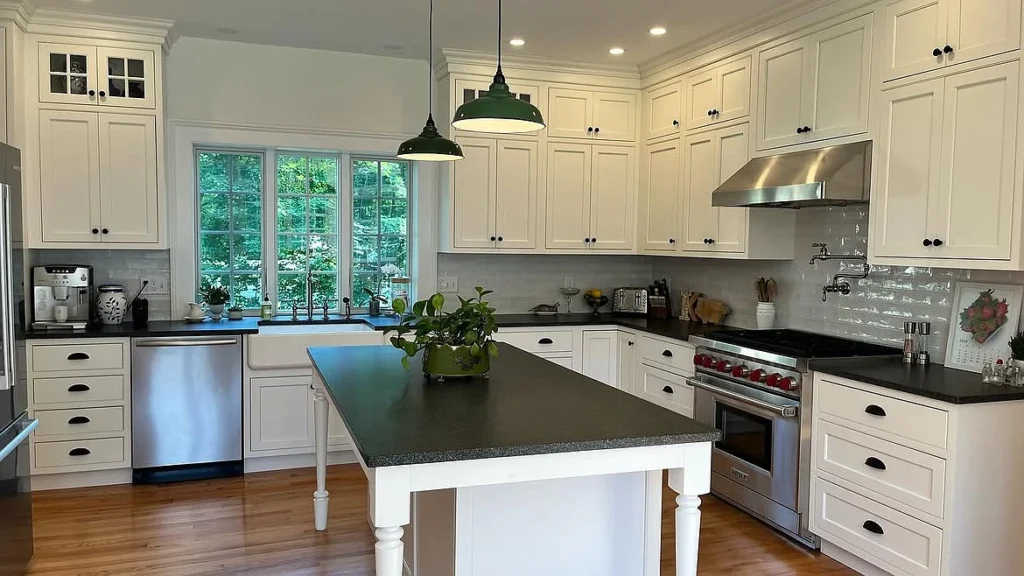

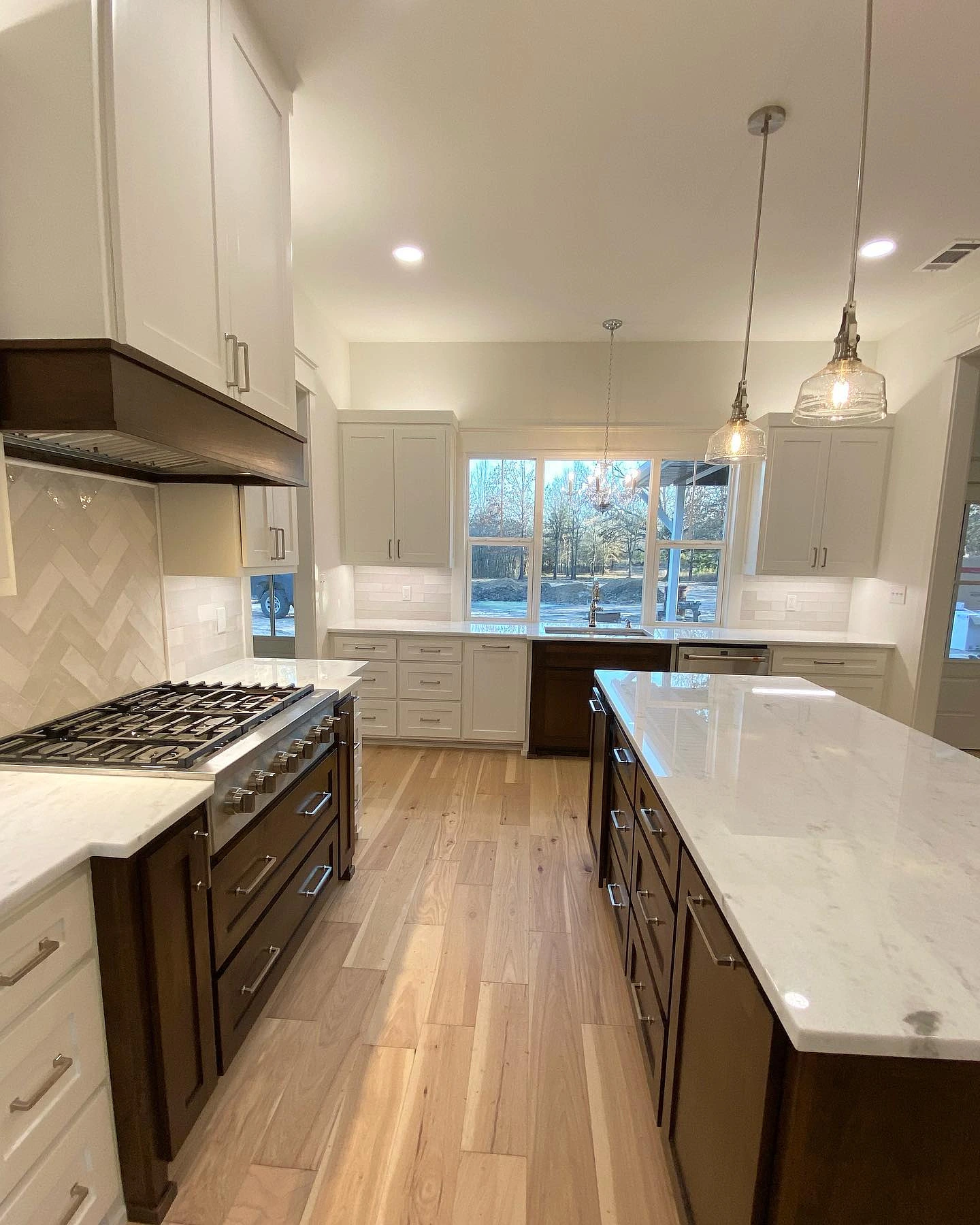
Slabs of this quartzite are cut from huge blocks at the quarry, and one block listed on a European slab marketplace had been sliced into 39 of them. Slabs taken from that block one after another will match each other far more closely than two slabs from different blocks standing side by side in a yard. I think that small detail decides more about how a finished kitchen looks than most of the design choices people spend weeks on.
The stone comes from northeastern Brazil, mostly around Uruoca in the state of Ceará. It was named after the Taj Mahal in Agra because of its ivory color, although the monument itself was built with Makrana marble from Rajasthan. Marble etches when lemon juice sits on it. This quartzite rates about 7 on the Mohs hardness scale, which puts it much closer to granite.
You get the warm look of an Italian marble on a counter that can handle daily cooking.
Most Slabs Have A Cream Base With Gold And Taupe Veins
The background usually falls between creamy white and pale beige. Across it run soft veins in gold, amber, taupe and light gray, and the amount of movement changes a lot from one slab to the next. Some pieces show only a few faint lines, while others are covered in veins that drift across the stone like smoke. Even slabs from one quarry lot can differ in color, so a photo on a supplier’s website will not show you what your own slab is going to look like.
Most yards stock this stone in three finishes:
- Polished, which gives the most shine and makes the veins look deeper.
- Honed, sometimes sold as satin, which has a matte surface and shows fewer smudges.
- Leathered, which has a light texture you can feel with your hand.
These Cabinet Colors Go Best With This Stone
The veins in this stone are warm, so the cabinets and walls around it should carry some warmth too. A bright white paint with a blue undertone can make the cream in the stone look yellow next to it.
Wood Cabinets That Bring Out The Gold Veins
White oak has a golden tone in its own grain, and that tone picks up the amber streaks in the stone. Ash does a similar job. One homeowner on the Houzz forums described dropping her plan for hickory cabinets and choosing ash cabinets with Taj Mahal counters instead, and she called the result “not as jazzy but very attractive.” I liked that answer, because it is honest about what this stone does best. Wood stained dark red or orange tends to clash with it, so a natural or lightly stained finish will work better.
Paint Colors That Suit The Cream Background
Warm whites and creams let the counter stay the brightest surface in the room. Muted greens such as sage and olive also pair well, because the taupe in the veins connects them. Navy can work too, as long as the walls and backsplash stay on the warm side.
Hardware And Light Bulbs To Choose
Brushed brass, unlacquered brass and oil rubbed bronze all match the amber in the veins. Polished chrome is a personal choice, but I find it looks cool and flat against the cream. Light bulbs change the stone’s color more than most people would guess. A bulb rated 2700K to 3000K will keep the counter looking creamy at night, while a 5000K daylight bulb can make it look noticeably grayer.
You Can Use The Stone On Backsplashes, Islands And Edges
Kitchens with this stone often use it in more places than the countertop.
Full Height Backsplash
A backsplash cut from the counter slab lets the veins continue up the wall behind the range without a break. Arizona Tile says its slabs of this stone are bookmatched, which means two neighboring slabs are cut and polished as mirror images. When they are opened out side by side, the pattern spreads from the seam in both directions, and that effect looks especially good on a backsplash or the front of an island.
Waterfall Island
On a waterfall island, the top turns at the end and runs down to the floor. The extra stone and the mitered corner add cost, often a thousand dollars or more for each side. If I were watching the budget, I would put a thick mitered edge on a standard island instead, since it gives a similar heavy look for much less money.
Edge Profiles
Plan on an eased or mitered edge from the start. Arizona Tile notes that quartzite this hard may not take an ogee edge at all.
How To Choose The Right Slab At The Stone Yard
A full slab of this stone can measure around 128 by 67 inches, and the veining you like may only appear in one part of it. A small sample or a phone photo cannot show you how the pattern moves across the whole piece, so you will need to see the slabs in person.
Test A Sample To Make Sure It Is Real Quartzite
Some yards sell softer stones, mainly dolomite, under the quartzite name. Dolomite rates around 3.5 to 4 on the Mohs scale, and acidic foods such as lemon juice, tomato sauce and wine can etch it. I would not pay a deposit before asking for a small offcut and trying these tests at home:
- Leave a few drops of lemon juice on the surface for 15 minutes, wipe it off and look for a dull patch.
- Run a steel knife blade across the surface and look for a scratch.
- Rub a corner of the sample across a piece of glass to see whether it leaves a scratch on the glass.
Real taj mahal quartzite will scratch glass, and it will not be scratched by a knife or dulled by lemon juice.
While you are at the yard, look closely at the surface for pits and cracks. Arizona Tile explains that resin is applied during polishing to fill natural pits and fissures, which is normal for this stone. A long crack across the slab should be discussed with your fabricator, who can show you where it would fall in your layout before any cutting begins.
Buy Consecutive Slabs From One Block
If your kitchen needs two or three slabs, the order they were cut in matters as much as their color. Yards usually number the slabs from each block, so you can ask to see the numbers and pick ones that sit next to each other.
Ask the yard for consecutive slabs from one block, and have them tagged with your name before you leave.
Compare The Slab With Your Cabinet Door In Daylight
Most stone yards use strong overhead lights that change how the stone looks. Bring a cabinet door, a piece of hardware and your paint chip, and hold them right against the slab. A Houzz forum member went back to her yard with several cabinet doors and her contractor, and together they found that the quartzite she had chosen had too much orange for her cabinets. If the staff can move a slab near an open door, ask them to, since natural light shows the true color.
How Often You Should Seal The Countertop
Quartzite does not etch easily, but it still has some porosity, and cooking oil can darken an unsealed surface over time. Arizona Tile recommends a penetrating sealer made to soak into the stone’s open structure. Sealer makers give different answers on how often to reapply, so I prefer a simple water test over a fixed schedule. Put a few drops of water on the counter near the stove, and if they soak in and darken the stone instead of beading on top, the surface needs a fresh coat of sealer.