


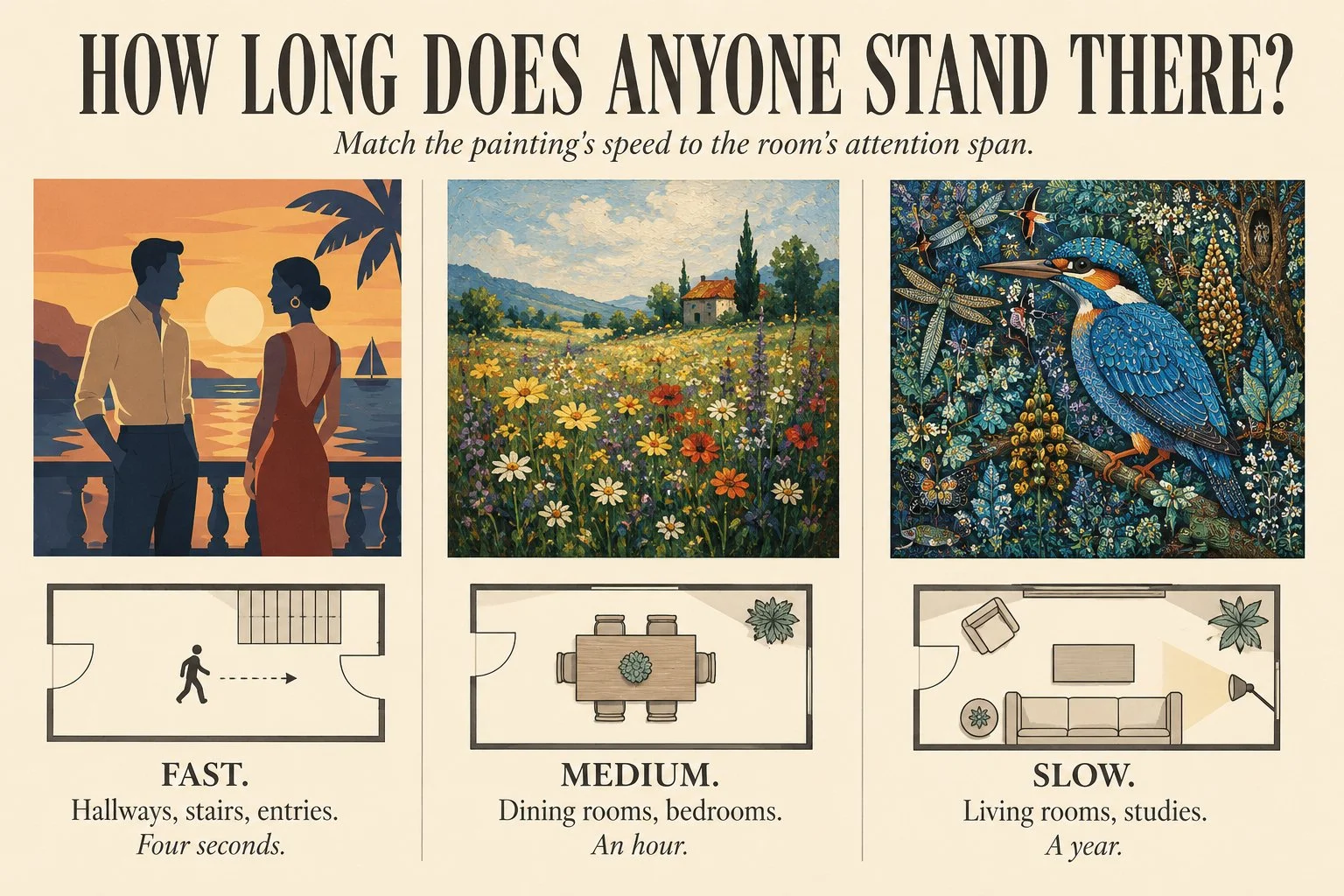
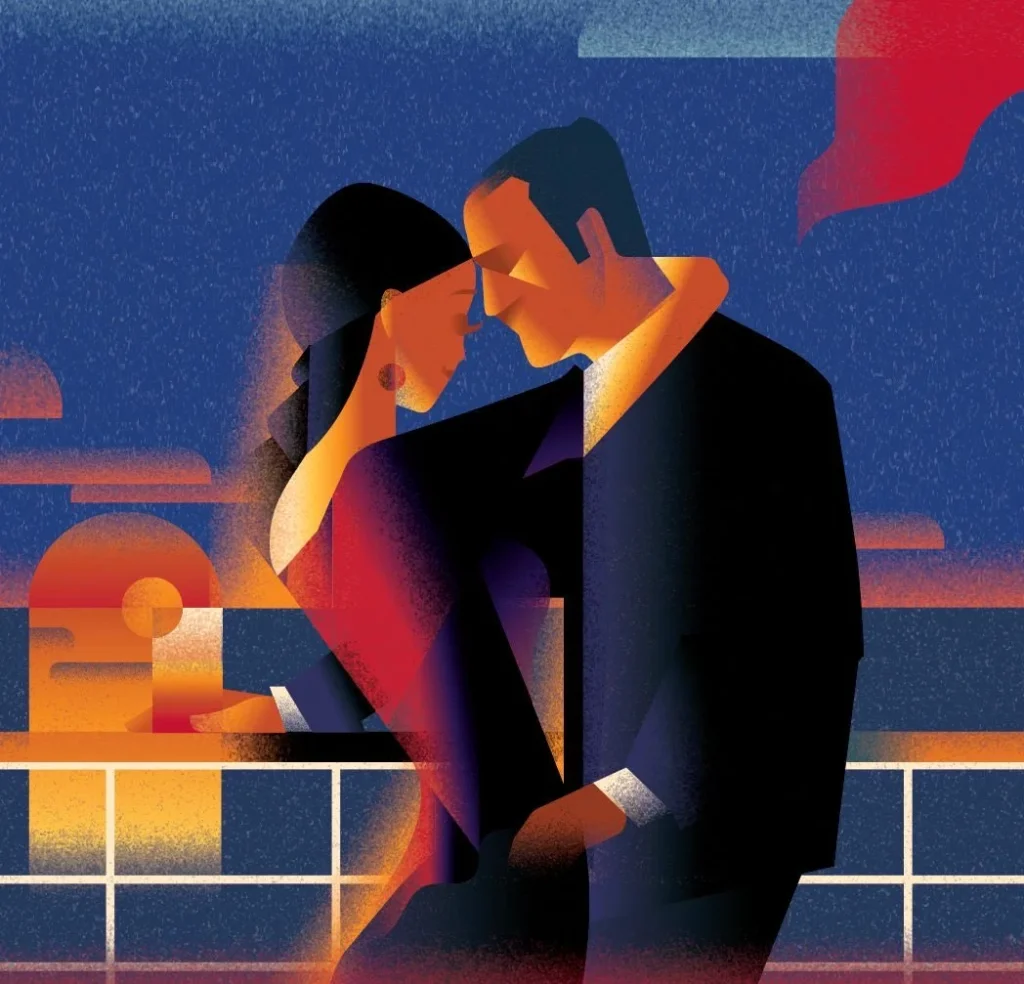
Some paintings give you everything in one look. The deco couple above is like that. Two silhouettes, a sunset burning behind them, maybe six colors total and you’ve received the whole image before you’ve finished raising your eyes to it. It’s a gorgeous thing and it is completely done with you in about four seconds.

Now look at the birds. Same wall, opposite metabolism. Four blue birds, then you notice every feather is a different pattern, then the bees in the top corner, then the dragonfly at the bottom left and there’s a butterfly hiding by the right edge that took me three passes. This painting is not done with you in four seconds. It might not be done with you in a year.
Neither one is better. They run at different speeds and the useful question for decorating is not which painting you like more, it’s how long anyone actually stands in the room you’re hanging it in. A hallway gets you for five seconds at a time. A sofa gets you for two hours. Hang the four-second painting where people spend four seconds and save the year-long one for the room where somebody can sit and let it keep going.
Fast Paintings Belong In The Rooms You Walk Through
The three poster-style pieces here are by Mads Berg and they’re built the way good posters have always been built: hard silhouettes, flat planes of color, no detail smaller than what you can catch from a moving tram.
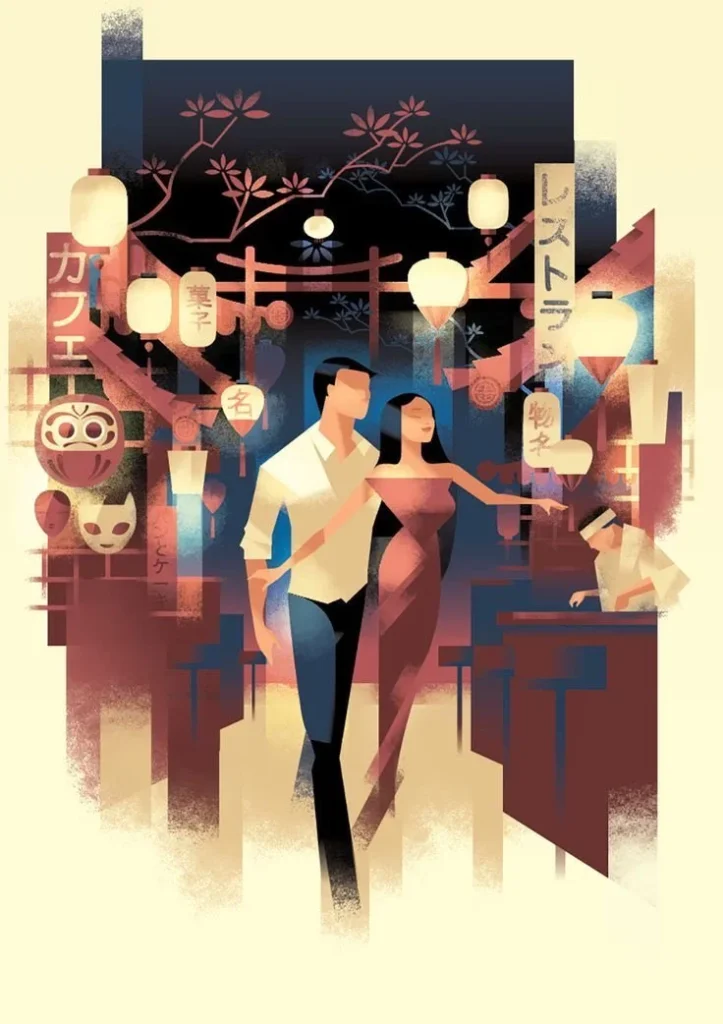
That construction is exactly what a hallway, an entry or a stair landing needs. You pass those spots dozens of times a day and never stop in them, so a painting hung there has to land it’s whole effect in the width of a glance. The lantern scene does it with light, dozens of paper lamps glowing against the dark, readable from the far end of a corridor. Fine brushwork would be wasted in that spot. Nobody’s close enough, long enough, to see it.

Fast paintings also happen to be the ones that work as a run. Three by the same hand, spaced down a hallway, read like frames of one film and the sun-bleached casino scene closes the set of these with a completely different light than the two night pieces, which keeps the run from going monotone. One artist, one speed, three moods. That’s the whole recipe for a hallway.
The Middle Speed Covers Most Sofa Walls
Most paintings people actually live with sit between the poster and the puzzle and most of this batch lives there. They read fast from across the room and then repay a closer look with texture, which is the polite way of holding attention without demanding it.
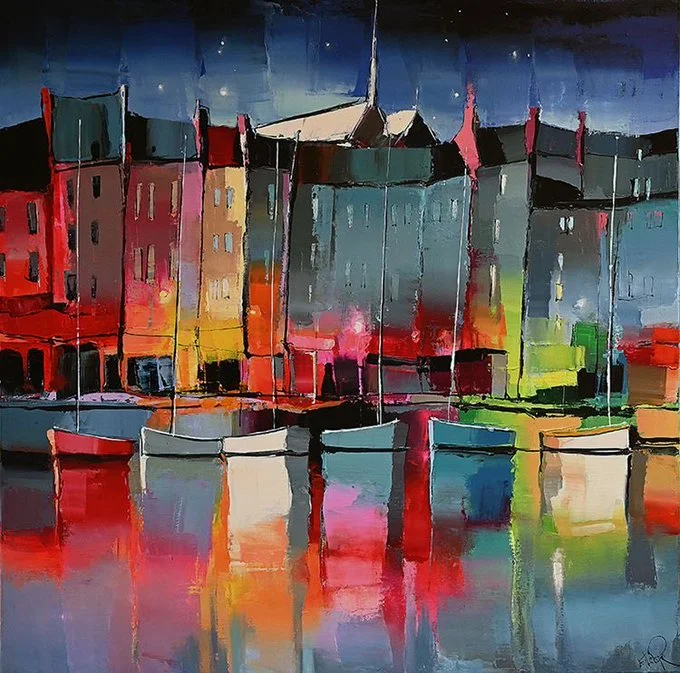
Most paintings people actually live with sit between the poster and the puzzle and most of this batch lives there. They read fast from across the room and then repay a closer look with texture, which is the polite way of holding attention without demanding it.
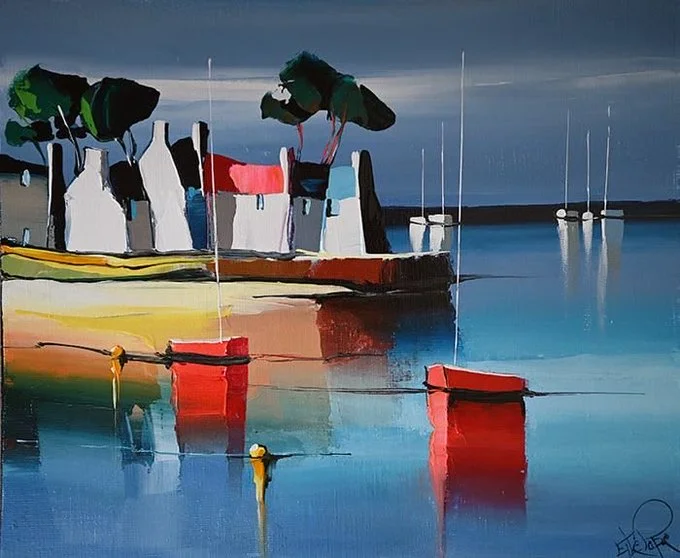
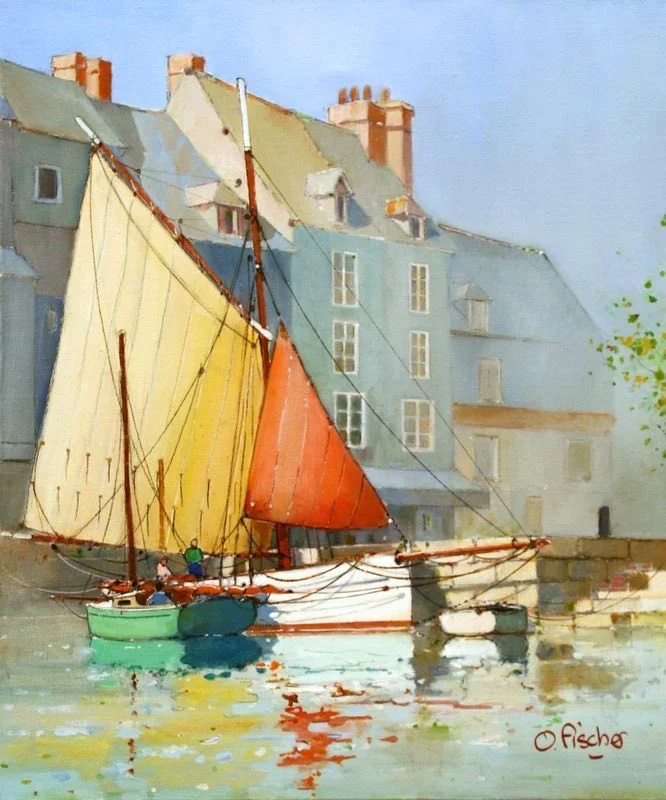
The sail painting signed O. Fischer runs quieter, washed light, a green hull, the red sail doubling in the water and would suit a bedroom for exactly that reason. Middle-speed doesn’t mean middle-volume. It means the image settles fast and the craft keeps paying.
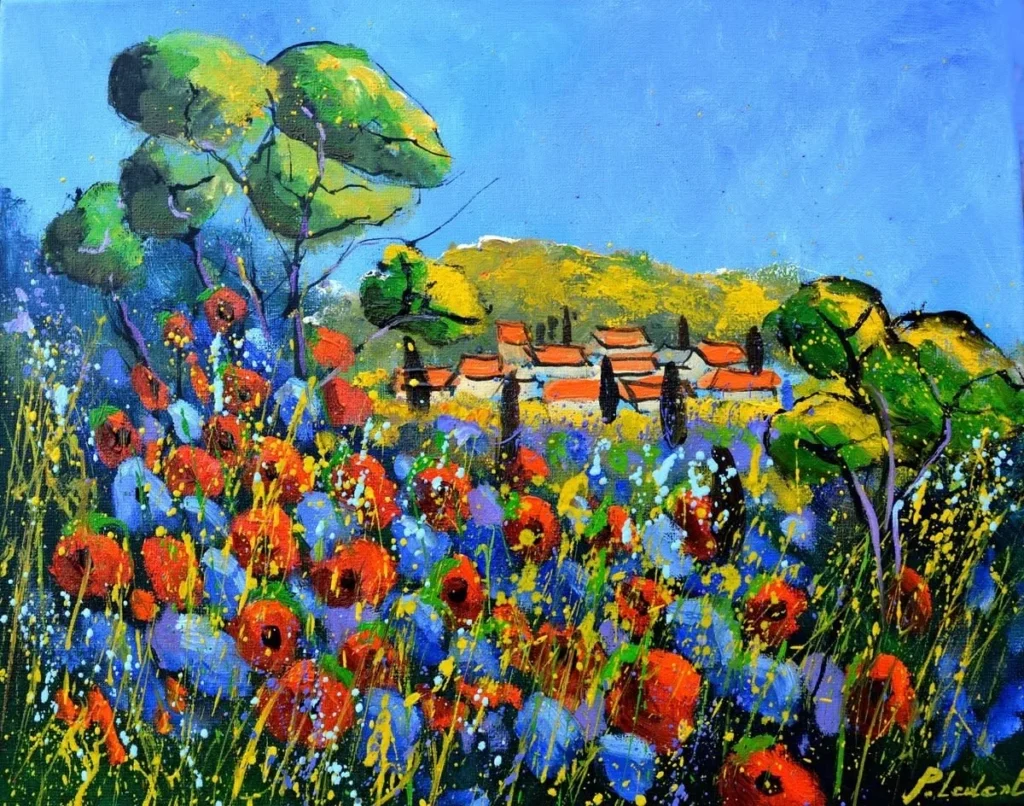
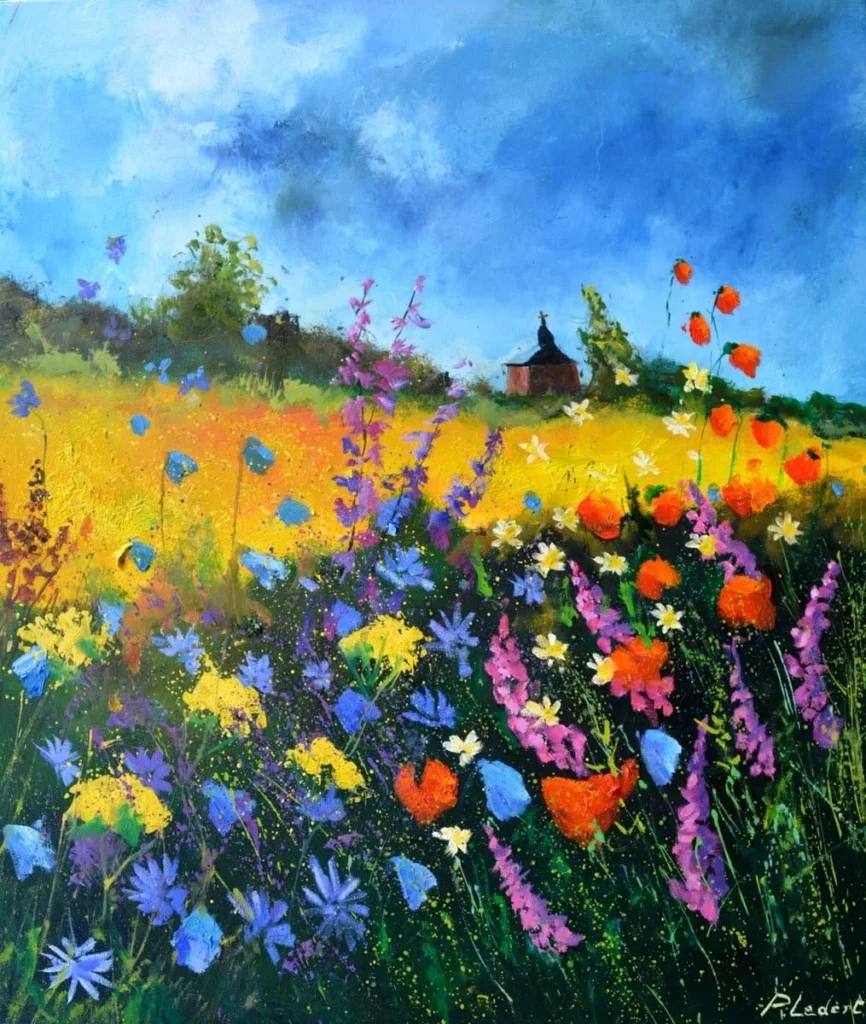
The flower fields are the warmest citizens of this category. Pol Ledent’s two meadows are all impasto and spatter, poppies laid on thick enough to throw tiny shadows and a wall of them does for a dim room roughly what a south window does.
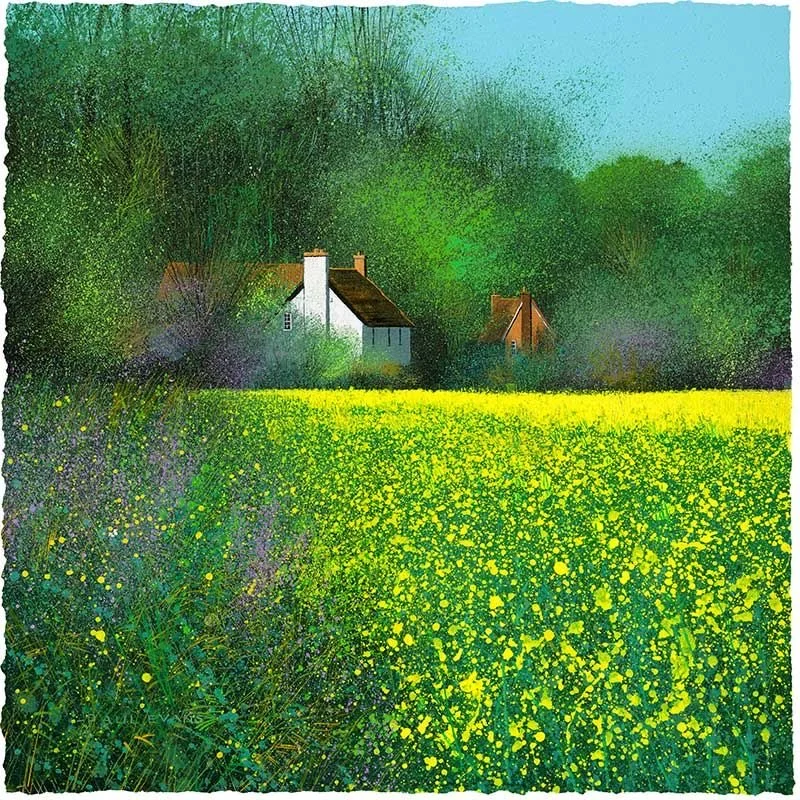
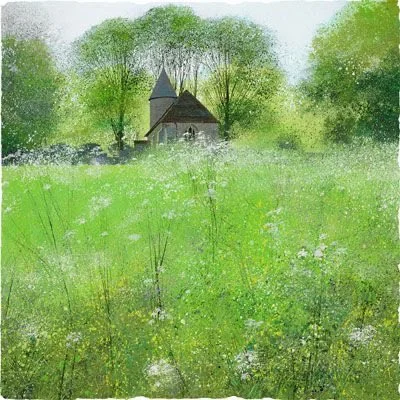
The two landscapes signed Paul Evans push the spatter further, whole fields built from flicked dots of paint, a whitewashed house floating in the yellow and up close they nearly turn abstract, which is the hidden bonus of the technique. You get a calm picture at distance and a fizzing one at arm’s length.
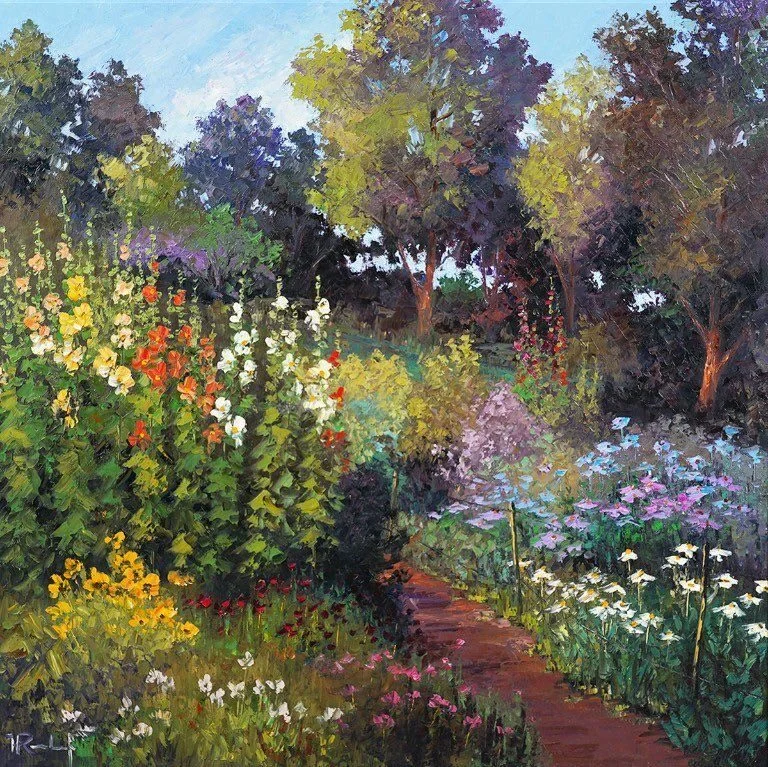
And the garden path, signed Ressdorf, does the oldest trick in landscape painting: the path bends out of sight, so the eye keeps walking. A picture with a road in it never quite finishes. Dining rooms take these garden and field pieces well, since dinner is the one time people sit and face a wall for an hour with nothing to do but talk and look past each other.
Slow Paintings Repay The Rooms Where You Sit Still
Then there’s the art you cannot exhaust in a season and it belongs wherever you genuinely sit, living room, study, the reading chair.

The second bird piece is the extreme case. Kingfishers, swallows, a red sun and then the bottom edge, where three tiny mermaids are sitting in the pond among the pike. Mermaids. In a painting you could hang in a living room for a month before a guest leans in and finds them. That discovery moment is a real feature of a slow painting and it’s one no fast image can offer, because a fast image has nothing left to discover.
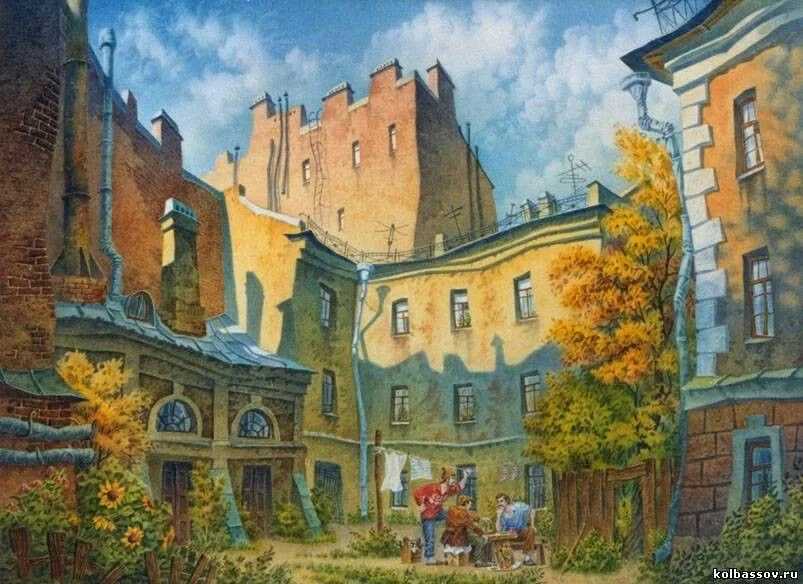
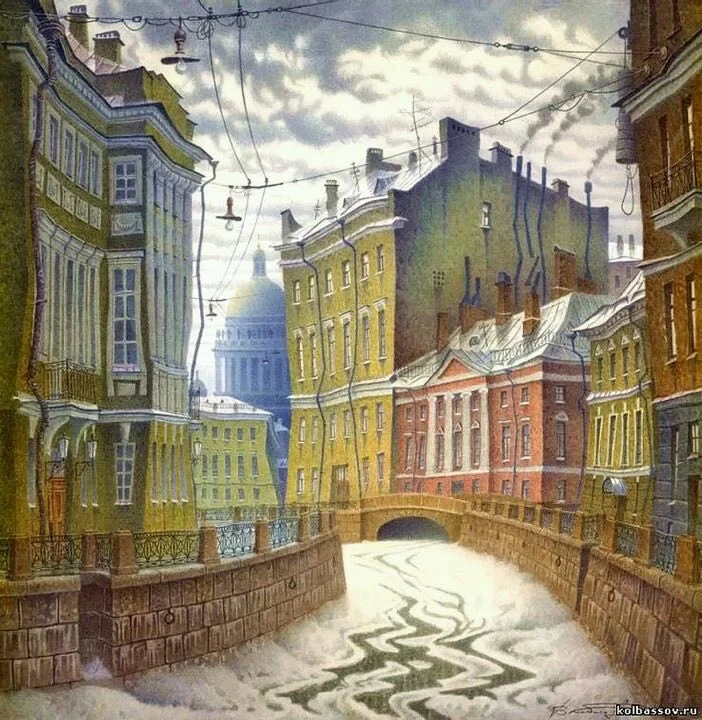
Vladimir Kolbasov’s two street scenes of St. Petersburg slow you down a different way. Nothing is hidden, but nothing is straight either, buildings lean toward each other, walls bulge, a shadow of a rooftop falls across a facade like spilled tea and in the courtyard a clothesline hangs over a table where a few men have settled in for the afternoon with a dog underneath. It’s the accumulated small life in them that keeps giving, aerials, drainpipes, one lit window.
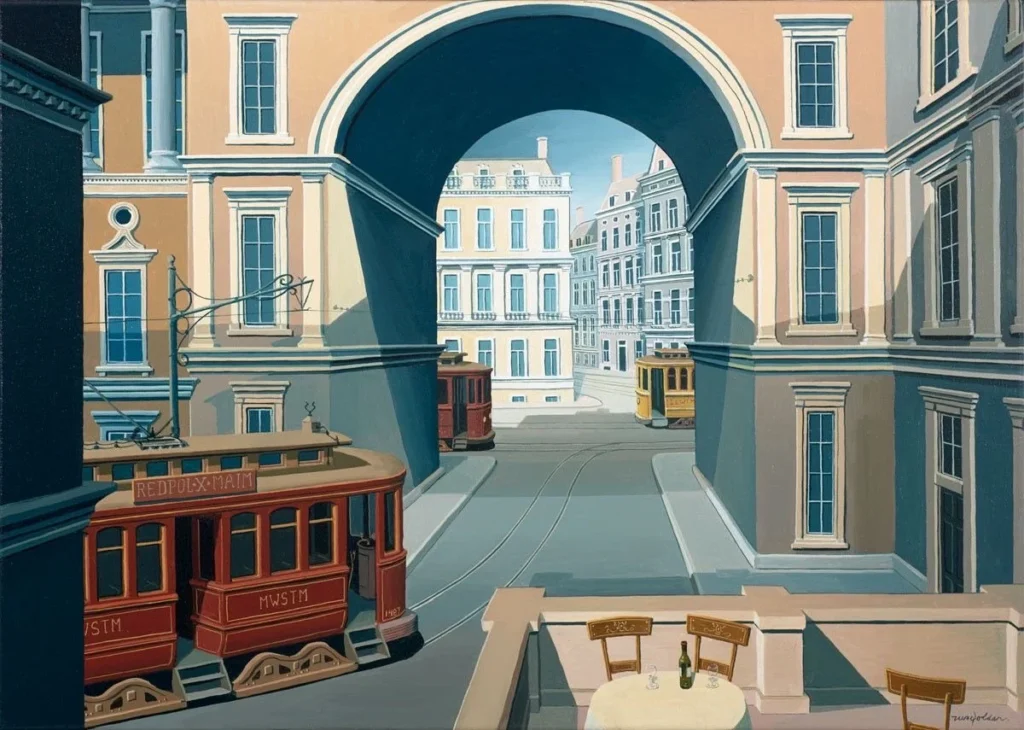
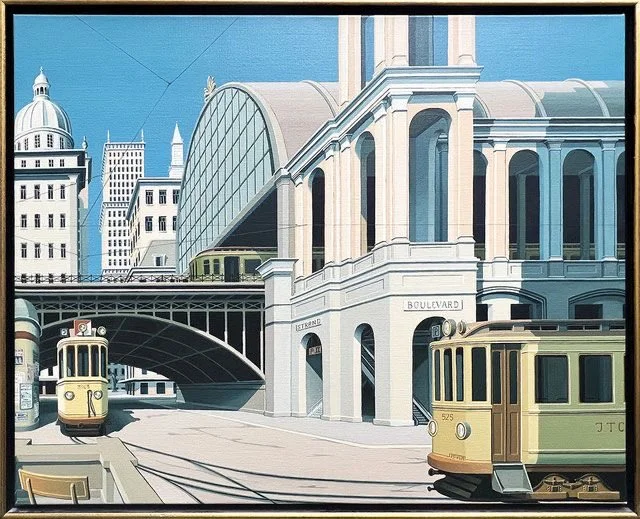
The tram paintings by Joop Polder are the ones I can’t confidently place on the speed scale and I’ve stopped trying to force it. They look fast, clean architecture, flat light, poster-adjacent. Then you notice the streets are empty, the trams have no drivers and someone has abandoned a table with an open bottle and two glasses in the foreground and the picture quietly refuses to resolve. That refusal is the slowest thing on this page. Hang one where you think, not where you pass.
One practical note for this whole category: slow paintings are the ones worth putting light on. Detail you can’t see is detail you don’t own and a small picture light or a well-aimed lamp is the difference between the mermaids existing and not. It’s also worth buying slow art physically larger than you think you need or hanging it lower than gallery height above a chair, close enough to read. A dense painting hung high across a room has been converted, expensively, into a fast one – the same waste as burying a poster in a study and the reason to sort any set of painting prints by speed before you sort by color.
I keep coming back to the fact that the mermaids stayed hidden from me for three passes and that somewhere there’s a version of that painting hung over a staircase, where nobody will ever find them at all.