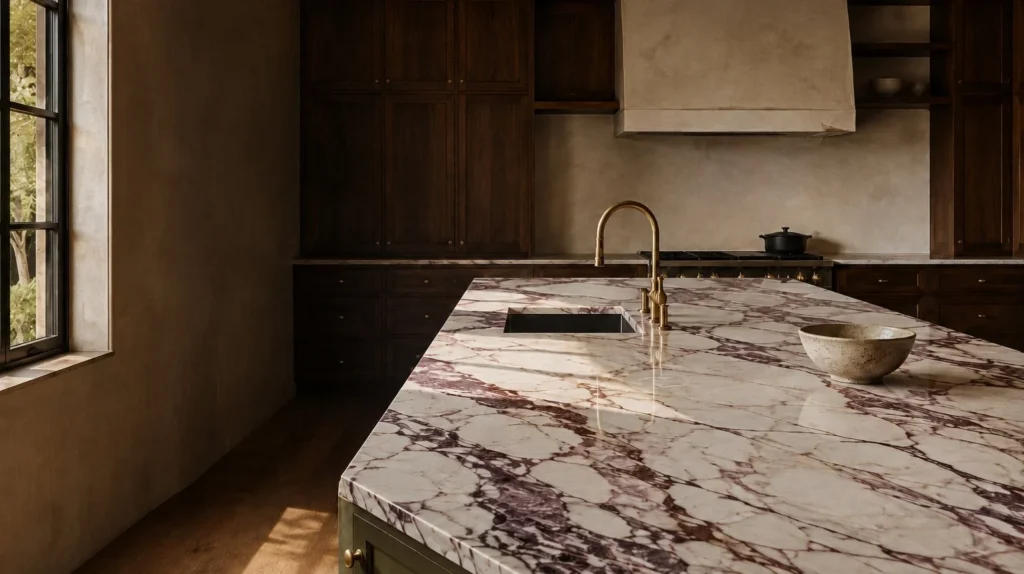


A lot of old farmhouses still have soapstone sinks that were put in well over a hundred years ago, and nobody was buying special stone cleaners back then. Those sinks got soap, hot water, and a rag, and many of them are still in use. I think that tells you most of what you need to know about cleaning a soapstone countertop. The stone asks for very little, and most of the trouble owners run into comes from using too much product or the wrong one.
Soapstone is mostly talc, the soft mineral that goes into baby powder. It is dense enough that spills sit on top and don’t soak in, which is why school chemistry labs used it for benchtops. It is also soft, about 1 to 3 on the Mohs hardness scale against roughly 6 or 7 for granite, so it picks up scratches easily, and as you will see further down, it gives them up just as easily. For anyone still picking a countertop while they prepare for a home renovation, that low upkeep is worth weighing next to the scratches.
Dish Soap And Warm Water Handle Everyday Soapstone Cleaning
A few drops of dish soap in warm water and a soft cloth will take care of almost every daily mess on soapstone. Wipe the counter down, along with the backsplash if it is cut from the same slab, go over it once more with a cloth rinsed in plain water, and dry it with a towel. Water left to dry on its own leaves a dark patch behind, and while it fades in an hour or so, it can make a clean counter look dirty in the meantime.
New owners tend to carry a coaster to every glass for the first month, then give up once they notice the ring is gone by dinner. That is fine. The ring was only water.
Dried-on food needs a warm, wet cloth laid over it for a few minutes, and after that it will scrape off with a plastic scraper or an old credit card from the junk drawer. I wouldn’t let a butter knife near it, because metal leaves a mark in stone this soft.
Pledge And TSP Will Scratch Or Strip Soapstone
The cabinet under the sink is where the trouble usually comes from. These are the ones to leave on the shelf:
- Bar Keepers Friend powder, along with steel wool and the green Scotch-Brite pad, since all of them leave fine scratches
- bleach and hydrogen peroxide, which can lighten the stone in blotches
- Pledge or any furniture spray with wax or silicone, because it leaves a cloudy film
- TSP and other heavy degreasers, which strip the oil off the surface
- glass cleaner (it streaks, and with daily use it can dry the stone out)
Vinegar won’t etch soapstone the way it eats into a marble kitchen counter, but it does draw the oil out of the surface, so save it for hard water spots.
Water And Cooking Oil Darken Soapstone
A new slab usually comes in a soft gray, and some have a green or blue cast to them. Water darkens it for a while until it dries. Cooking oil, butter, and the oil on people’s hands darken it for good, so over the first year the stone around the stove and the sink goes darker while the corner under the fruit bowl stays pale, and the whole counter can look a little patchy.
Rubbing mineral oil over the entire top darkens all of it at once to a deep charcoal, and after that a splash of olive oil doesn’t stand out as its own spot. The oil changes the color only. It doesn’t protect anything.
Does soapstone need to be sealed?
No. A sealer needs pores to sink into, and soapstone is too dense to give it any, so most fabricators tell people to skip it.
Oil A New Counter Every 2 To 4 Weeks, Then A Few Times A Year
Food-grade mineral oil is one of the cheapest things in the drugstore, and one small bottle will last a whole kitchen for months. Rub a thin coat in with a clean cloth, let it sit for 20 to 30 minutes, and buff off whatever is left on top. The usual rhythm goes something like this:
- every 2 to 4 weeks for the first few months
- a few times a year after the color settles
- never, for anyone happy to let the stone darken up on its own over a few years of cooking
Honestly, I’d skip the oil altogether in a house with kids, since the counter gets to the same dark color by itself and nobody has to remember another chore. Tung oil and Danish oil are a poor fit, as they harden while they cure and can leave a shiny, uneven film. Some owners use a soapstone wax like Dorado Soapstone Wax, or Mahoney’s oil and wax finish, and say one coat lasts them nearly a year.
Vinegar Clears Water Spots And Baking Soda Lifts Rust Rings
Real stains are rare because so little gets into the stone, but a working kitchen still leaves its marks:
- Hard water spots: wipe with a cloth dampened in diluted white vinegar, then rinse and dry.
- Dark oil marks: oil the whole counter and the mark will blend in.
- Rust rings from Grandma’s cast iron or a soup can: cover them with a baking soda and water paste for 20 to 30 minutes, rub gently, and rinse.
- Sticker or tape residue: Goo Gone is safe on soapstone.
- Dried paint or food: scrape off with plastic, then wash with dish soap and warm water.
Most Soapstone Scratches Sand Out With 220-Grit Paper
A chipped granite counter usually means a call to a stone repair company. On soapstone, the same softness that let the scratch in also lets you take it out at home in a few minutes, with a sheet of sandpaper from the hardware store.
Light Scratches Need Only 220-Grit By Hand
Sand the scratch with 220-grit paper by hand, following the grain if the slab has visible veins. Wipe the dust off with a damp cloth, let it dry, and rub a little oil in so the spot matches the rest.
Deep Gouges Go From 120 To 220 To 400-Grit
Start with 120-grit to bring the area level, move up to 220-grit, and finish with 400-grit if you want it smooth to the touch. A big worn patch goes much faster with a random-orbit sander, using 150-grit and then 220-grit paper, and sanding it wet keeps the dust from settling all over the kitchen. Sand a little past the edges of the scratch, so the repair blends into the stone around it and doesn’t leave a shallow dip.
Hot Pans Can Go Straight Onto Soapstone
Soapstone takes heat well and gives it back slowly, which is why it has been used for wood stoves and masonry heaters for generations. A pot straight off the burner won’t crack or scorch it. I keep a trivet out anyway, mostly because a rough cast iron skillet will scratch the top if it gets dragged.
Soap, water, a dry towel, and a bit of oil when the mood strikes will keep a soapstone counter looking right for decades, the same way those old farmhouse sinks have lasted.