


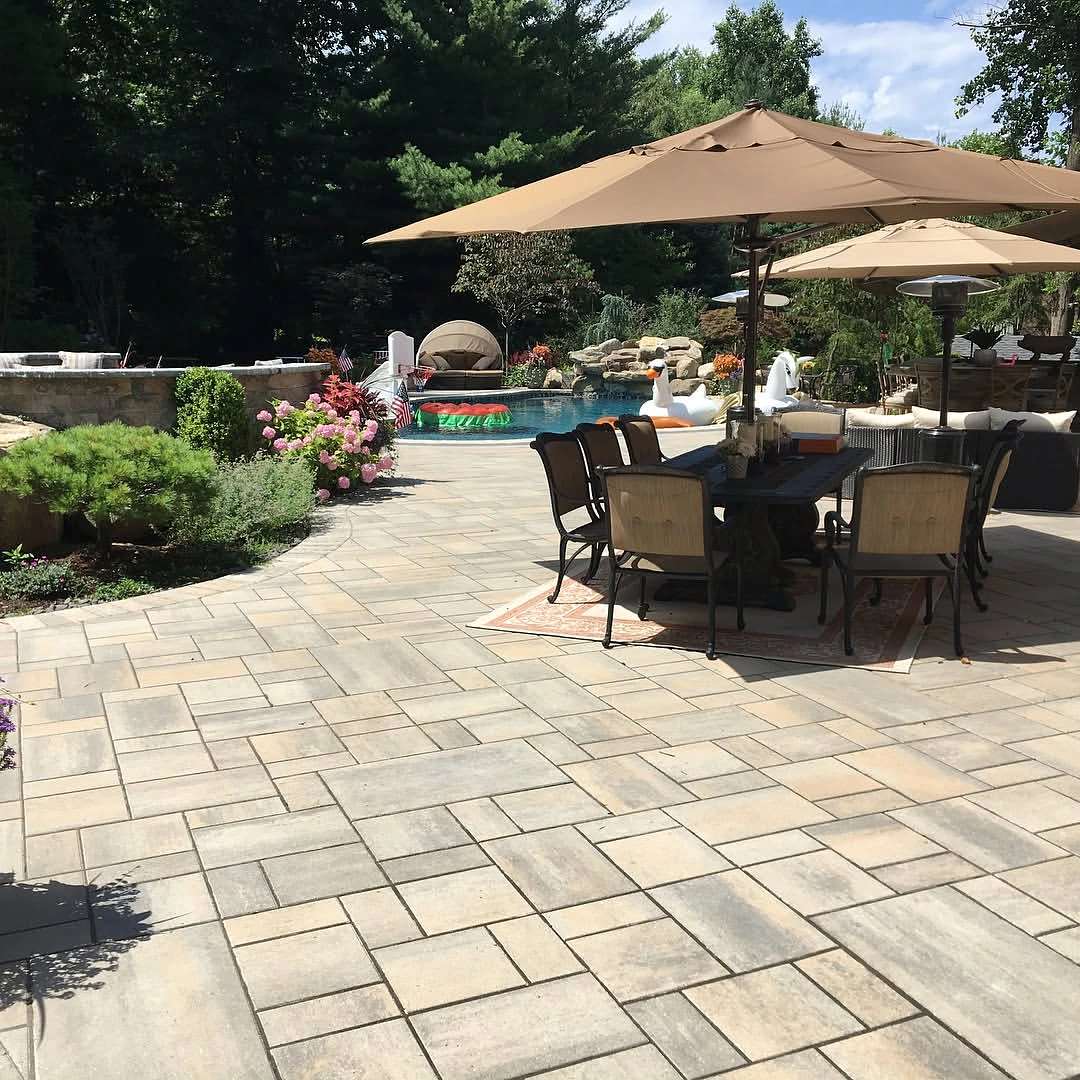
I had these three the wrong way round until I looked up the numbers. I assumed the fire pit with the Adirondack chairs was the sensible choice, that the covered kitchen was the expensive one, and that the plain lawn with the swing was there to fill out the set.
The resale figures say otherwise. The National Association of Realtors and the landscape trade group priced eleven outdoor projects in their 2023 report and asked agents how much of each cost comes back when the house sells. Three of the eleven match the three yards in the photos. They run below in the order the report ranks them, which turned out to be the opposite of my order.
A Maintained Lawn Returns 217 Percent Of Its Cost At Sale
Standard lawn care service was priced at about $415 in the report, and agents estimated it returns 217 percent of that when the house sells. For comparison, a full landscape upgrade at $9,000 came back at 100 percent. The lawn service cost far less and returned more than twice as much of what it cost.
Ninety two percent of the agents surveyed said they advise sellers to improve curb appeal before listing, and the lawn is the largest part of what a buyer sees from the street.
The second yard in the photos gets one thing right that is worth copying. The grass stops on a clean cut line and the beds are mulched right up to it. That edge does more for the overall look than the condition of the grass does. A lawn with an overgrown edge looks neglected even when the turf is healthy, while a lawn with a sharp edge looks maintained even when the turf is ordinary. If you have one afternoon, spend it on edging. The gardening tips on this site go through the rest of the upkeep.
Upkeep after that is limited. Mow at around 3 inches so the grass shades its own roots. Water deeply once or twice a week rather than lightly every day. Leave the clippings on the lawn unless they are clumping.
A Covered Outdoor Kitchen Costs About $15,000 And Returns All Of It
An outdoor kitchen was priced at $15,000 with a resale recovery estimate of 100 percent, the same figure as a full landscape upgrade. Homeowners who built one rated their enjoyment of it at 9 out of 10.
The fourth yard shows what makes that money back. The roof is the main part. A pergola with a solid or slatted cover means you can cook in rain, stay out of direct sun, and hang lights overhead, and it turns a grill station into a space people use in the evening rather than only at lunch. Without a cover, an outdoor kitchen is a grill and a counter on a patio, and it gets used the way a grill and a counter get used.
Three details in that photo worth noting:
- The grill sits at the open end of the structure rather than under the deepest part of the roof, which lets heat and smoke escape.
- The counter is long enough for food preparation on one side and bar stools on the other.
- The dining table is placed outside the covered area, where the light is better and smoke does not collect.
If a gas line is going to that counter, install it during the build. Trenching a line after the pavers are laid is where the cost increases sharply, and this is the one project of the three that cannot be relocated once built. The DIY projects on this site are weekend jobs. An outdoor kitchen with gas and electrical is not.
A Fire Pit Returns 56 Percent But Scores Highest For Enjoyment
A fire feature, described in the report as a dry stacked stone kit with a gas burner on a ten foot flagstone circle, was priced at $9,000. Homeowners rated their enjoyment at 9.7 out of 10, the highest of the three projects. Agents estimated it returns about 56 percent of its cost at sale.
Those two figures together explain who builds one. A fire pit is the project people choose for how they will use the yard, not for what the house will sell for, and the report is clear that the enjoyment score and the recovery figure point in different directions.
Adirondack Chairs Suit A Fire Pit Because You Cannot Sit Forward In One
The design dates to 1903, when Thomas Lee built a chair for the sloping ground behind his summer house in upstate New York. The wide flat arms and the deep tilted seat have not changed since. Around a fire they work because the seat holds you back in the chair, which is the posture you want for an hour or two of sitting.
A Wood Burning Fire Pit Needs 10 To 25 Feet Of Clearance
Placement is the part of this project most likely to go wrong. In the first photo the pit sits closer to the fence than the guidance allows.
- NFPA consumer guidance sets 10 feet from anything combustible as the minimum. A wood fence counts, and so does the edge of a deck.
- The formal fire code figure for a wood burning recreational fire is 25 feet, and some municipalities enforce that distance rather than the 10.
- Gas fire pits need less, often 3 to 6 feet where the manufacturer publishes a clearance for the model.
- Seating should sit at least 3 feet from the rim, on the side the prevailing wind does not usually come from.
- The base must be stone, brick, gravel or concrete, never a wood deck or grass.
Check your HOA rules before anything else, because many associations prohibit wood burning entirely and permit only gas. fuel type that covers the details before you buy a kit.
Which Of The Three You Can Build Yourself
In the same survey, four in ten homeowners completed the whole outdoor project themselves, labor and materials included. Another 13 percent did part of it.
The lawn and the fire pit fall into that group. A lawn requires consistent attention and nothing more. A stone fire pit kit can be assembled over a weekend if the patio surface already exists. The outdoor kitchen involves gas, electrical and a roof structure, all of which usually need permits and inspections, and it is the one of the three where hiring a contractor makes sense.