


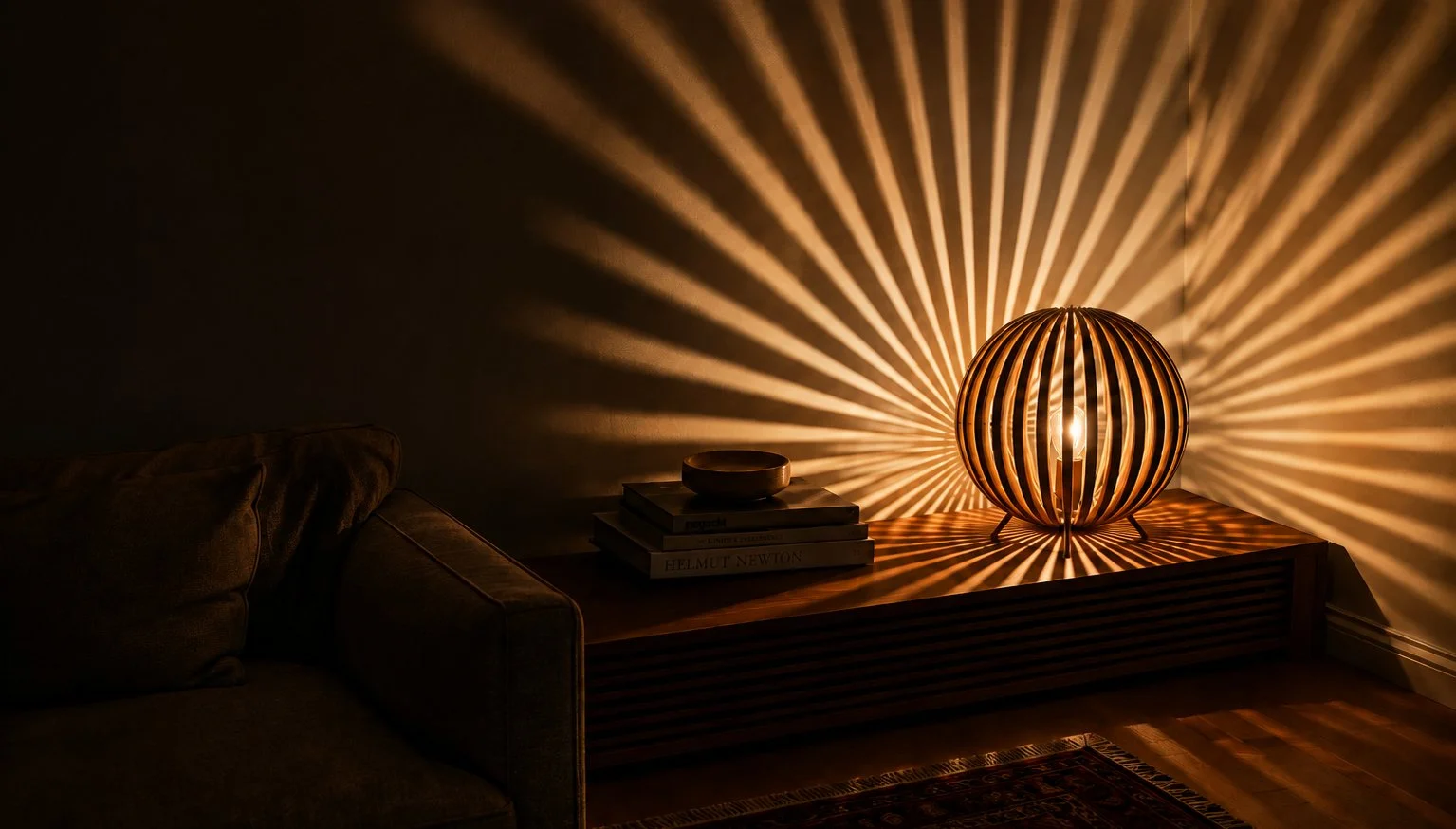
A plywood sphere the size of a melon, ribs running across it like lines of latitude, sitting on a bare wooden block. Switched off, it’s a craft-fair object, pleasant and forgettable. Switch it on and the ribs print themselves across the tabletop in long radiating stripes, the wall behind picks up a fan of soft bars, the corner of the room becomes the lampshade. The object didn’t change. The room did.
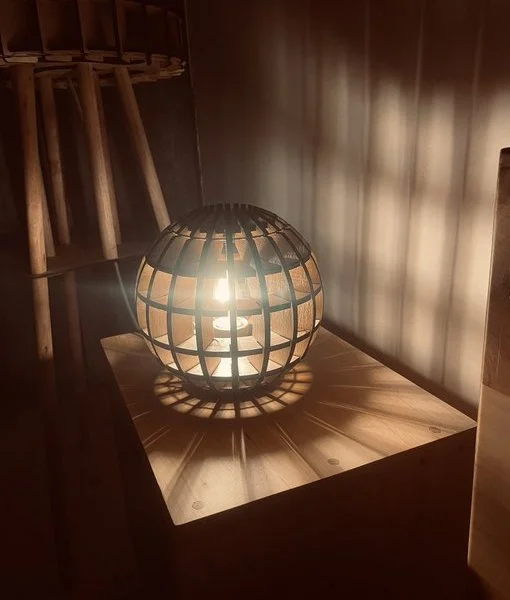
That switch-flip is the test almost nobody runs before buying a lamp. People shop in daylight, in showrooms or on product pages photographed bright, judging the object. The object is half of it. Every lamp is two purchases in one, the thing you see by day plus the pattern it throws at night, so the honest way to sort any set of lamps is by which of the two halves is doing the decorating.
Designers Have Started Treating Light As A Material
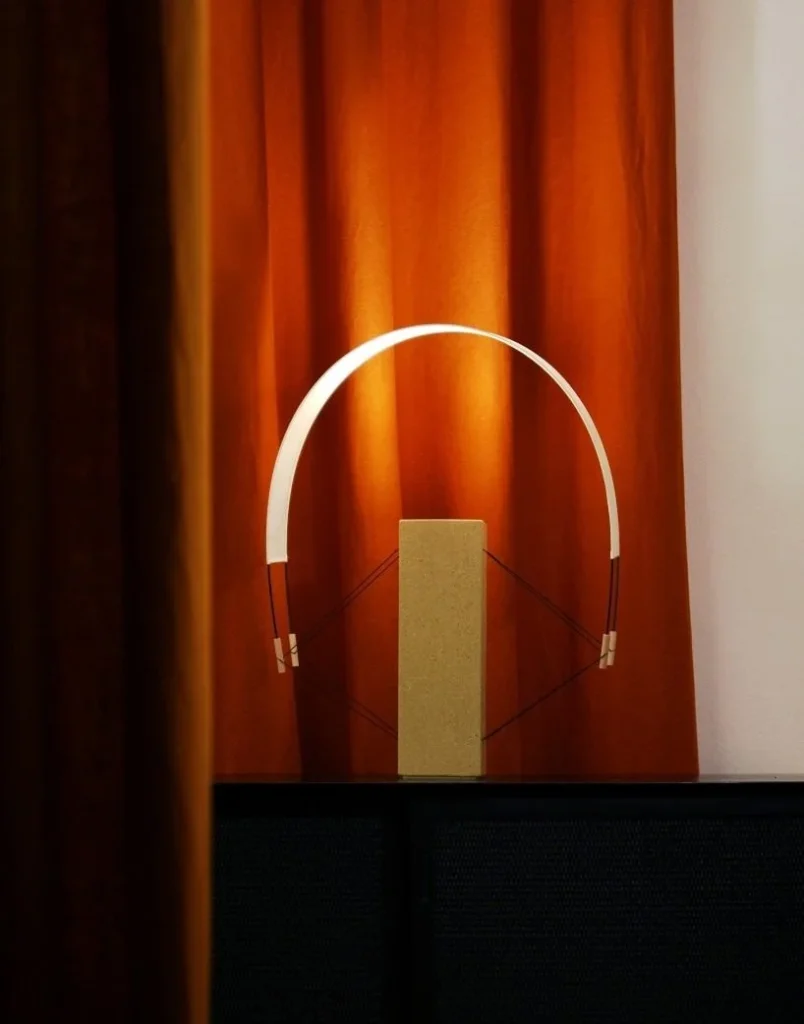
The high end of lighting has arrived at this idea formally. Maison Cedrat, a studio rooted in southern France, built its Aura collection around clay and handcrafted washi paper, with designers Pierre Samouilla and Alix Lalucaa approaching light almost as another material, one capable of altering texture, volume and atmosphere. By day the pieces read as simple geometry. Switched on, the paper filters everything into a warm golden glow the studio links to Mediterranean sunsets. One of the collection’s forms is a thin translucent arc rising from a rectangular stone-like block, a shape that means nothing until evening, when it becomes a half-halo of warm light hovering over the furniture.
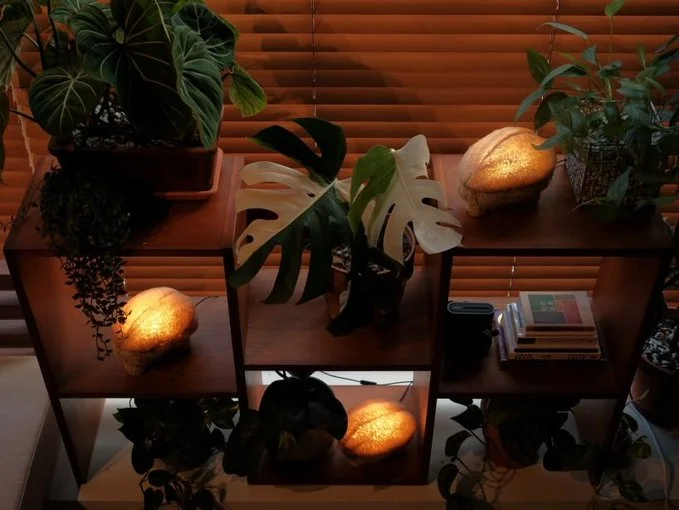
The material experiments go further than paper. A lamp called Gourdo grows its own housing: mycelium cultivated from oyster mushroom spores binds a substrate over roughly two weeks, luffa fiber reinforces the composite, then the softer outer layer of the luffa wraps the base as a permeable lampshade. Lit, it casts a warm amber glow filtered through the porous skin. Designer Justin Wan combines the fungal growth and plant-based luffa fibers to create it. On a shelf among houseplants the pieces look like bread rolls that learned to glow, which sounds like an insult and isn’t. They give off light the way an ember does, dim and warm and directionless.
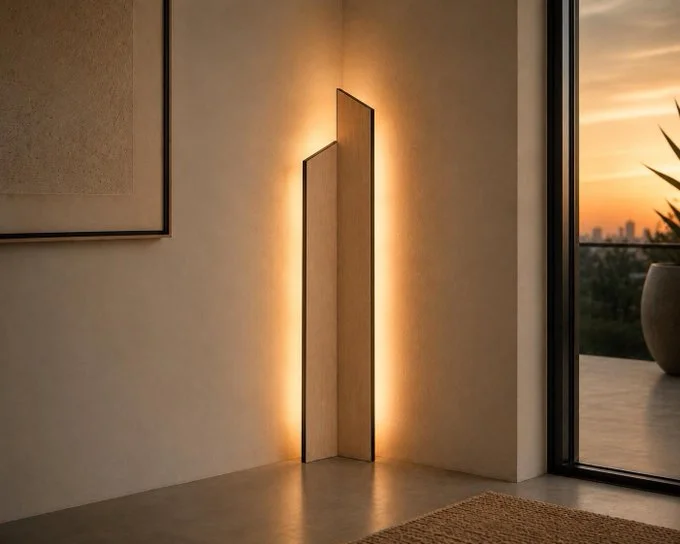
The mass-market version of light-as-material already exists, quietly. A pair of flat wood panels standing in a corner with an LED strip hidden along their back edges throws two columns of warm wash up the walls. No shade, no visible bulb, no shadow pattern. The wood is the daytime object, the wash is the nighttime one, the strip itself is never seen.
Shadow Lamps Need A Plain Wall And A Clear Bulb
Some lamps are shadow projectors that happen to hold a bulb. The most extreme are grown by software. Nervous System’s Hyphae series is generated by an algorithm modeled on how veins form in leaves, so every lamp is a one-off, each casting its own pattern of branching shadows on the wall and ceiling. The pieces are 3D printed in nylon and run a 3-watt LED fixture producing about 200 lumens. Hung as a trio of white lace bells, they turn the wall behind them into a thicket, tangled leaf-vein shadows spreading a yard in every direction.
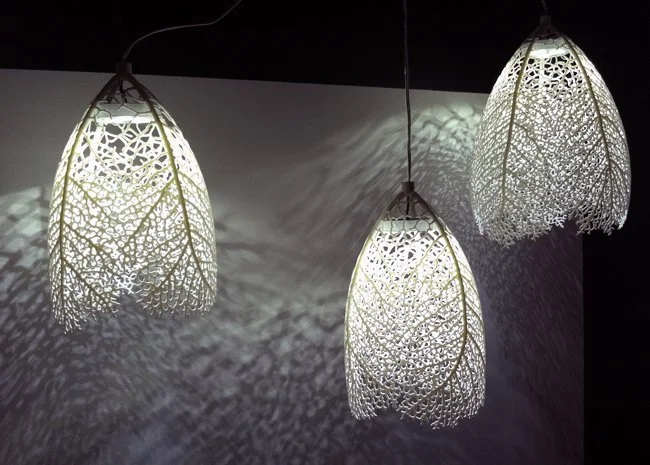
Keep that 200 lumens in mind, because it names the trade honestly. A shadow lamp is a mood instrument. Nobody reads under one. The pattern is the product, the illumination is a byproduct, so a room built around shadow lamps still needs a working light somewhere else.
Handmade versions of the same idea cost a fraction and follow the same physics. A drum of wooden slats on a tripod throws tall bars of light and dark up the wall behind it, window-blind stripes without a window. The sphere from the opening does it radially. A textured-glass sconce shaped like an hourglass in a brass collar fires two crisp fans, one up the wall and one down, out of nothing but pressed glass and a filament bulb.
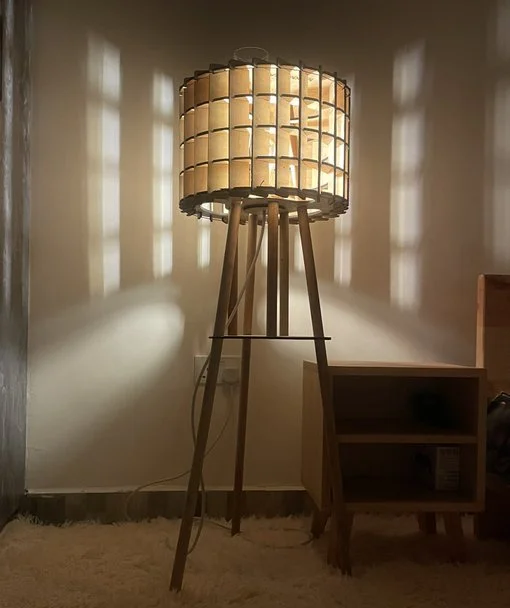
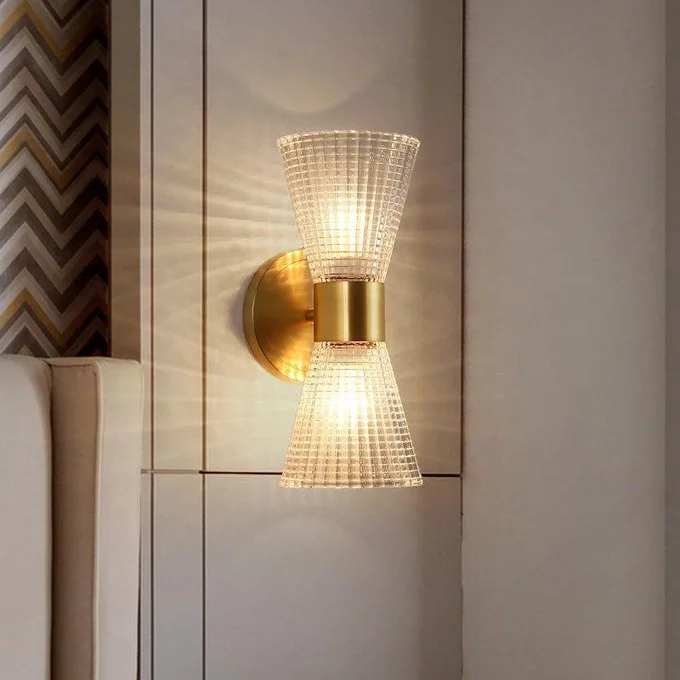
Three placement rules govern all of them. Skipping any one wastes the lamp. The wall has to be plain, since a shadow pattern landing on wallpaper or a gallery wall is two patterns fighting. Distance sets scale, so the same lamp two feet from the wall throws a tight pattern and six feet away throws a mural, which means the lamp position is a design decision, not an afterthought. The bulb decides sharpness: a clear filament bulb is a small bright point that casts crisp-edged shadows, while a frosted or heavily diffused bulb smears the same pattern into fog. Most shadow lamps arrive fitted with the wrong one.
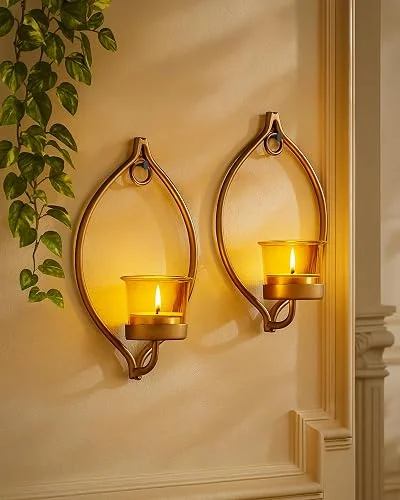
The oldest entry in the category outperforms on the test that matters. Two gold wall sconces holding tealights in amber glass throw warm halos that move, because flame flickers and LEDs hold still. No lamp in this set does that.
Body Lamps Earn Their Place Switched Off
The other family works the opposite way. The light is generic, the object is the point, so the honest way to judge one is unplugged, in daylight, sitting where it will sit.
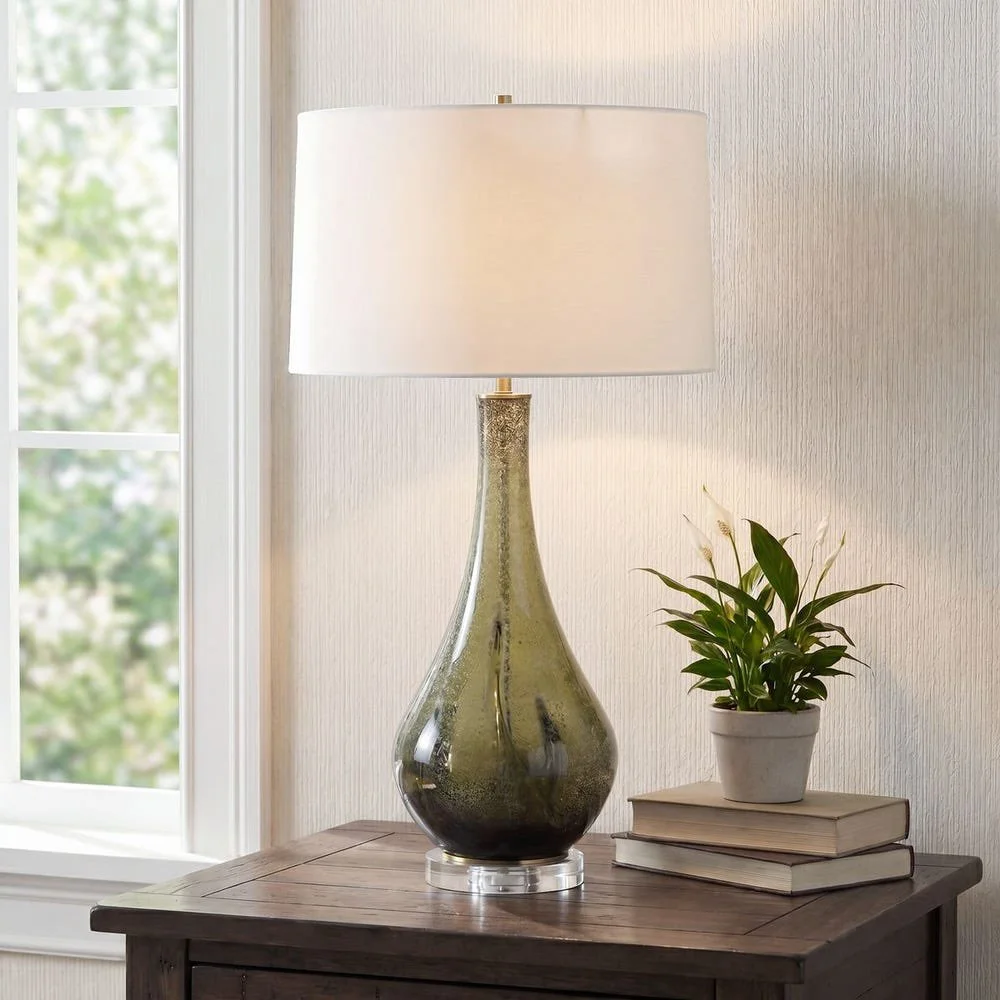
A teardrop of mottled green glass under a plain white drum shade is a good example of the type done well. The shade throws ordinary lamplight. The base is a piece of colored glass that holds its own on a side table at noon, next to a plant and a stack of books, doing vase work all day before doing lamp work at night.
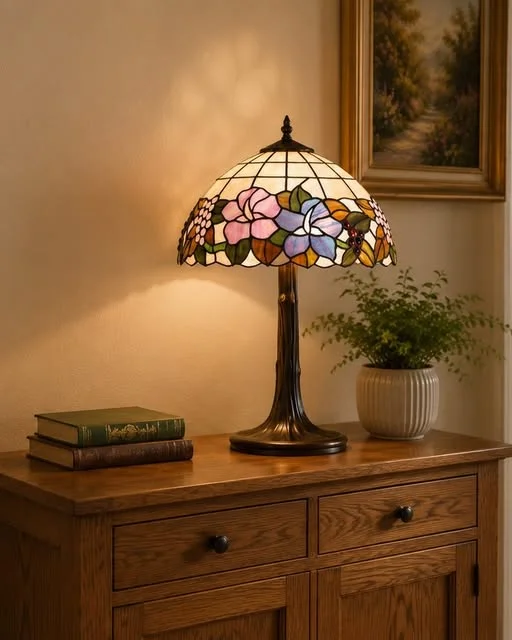
Stained-glass table lamps are the extreme of the family, which is why they divide rooms. A Tiffany-style dome of floral panels in pink, blue and green over a bronze tree-trunk base is a paperweight cathedral, fully itself with the switch off. What it adds when lit is color, the panels glowing like a small rose window, but the shadow it throws is nothing and the light it gives is dim and stained. It’s an object that happens to glow, so it belongs where objects belong, on a sideboard against a quiet wall, not where a reading light should go.
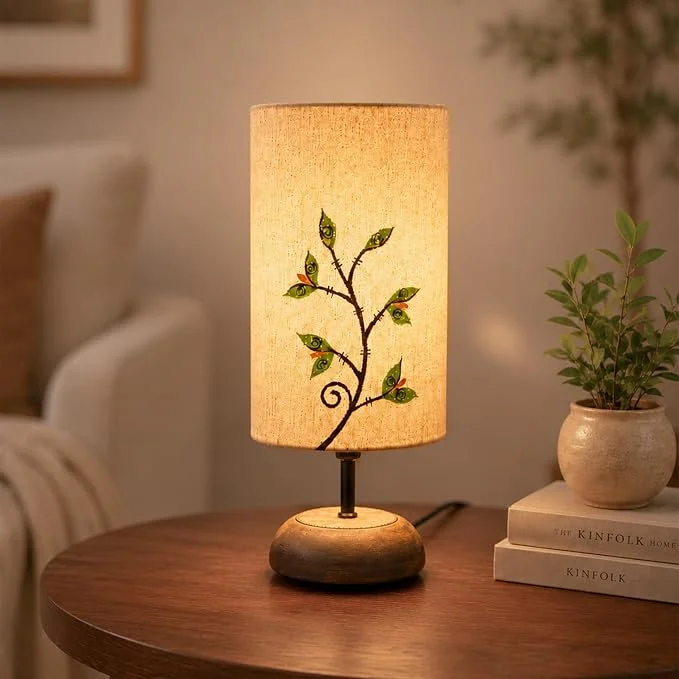
The printed and embroidered shades sit in the same family at the small end. A linen cylinder with a stitched leaf branch on a pebble-shaped wood base decorates a nightstand in daylight and glows amber at night with the branch in silhouette. Modest, cheap, honest about what it is.
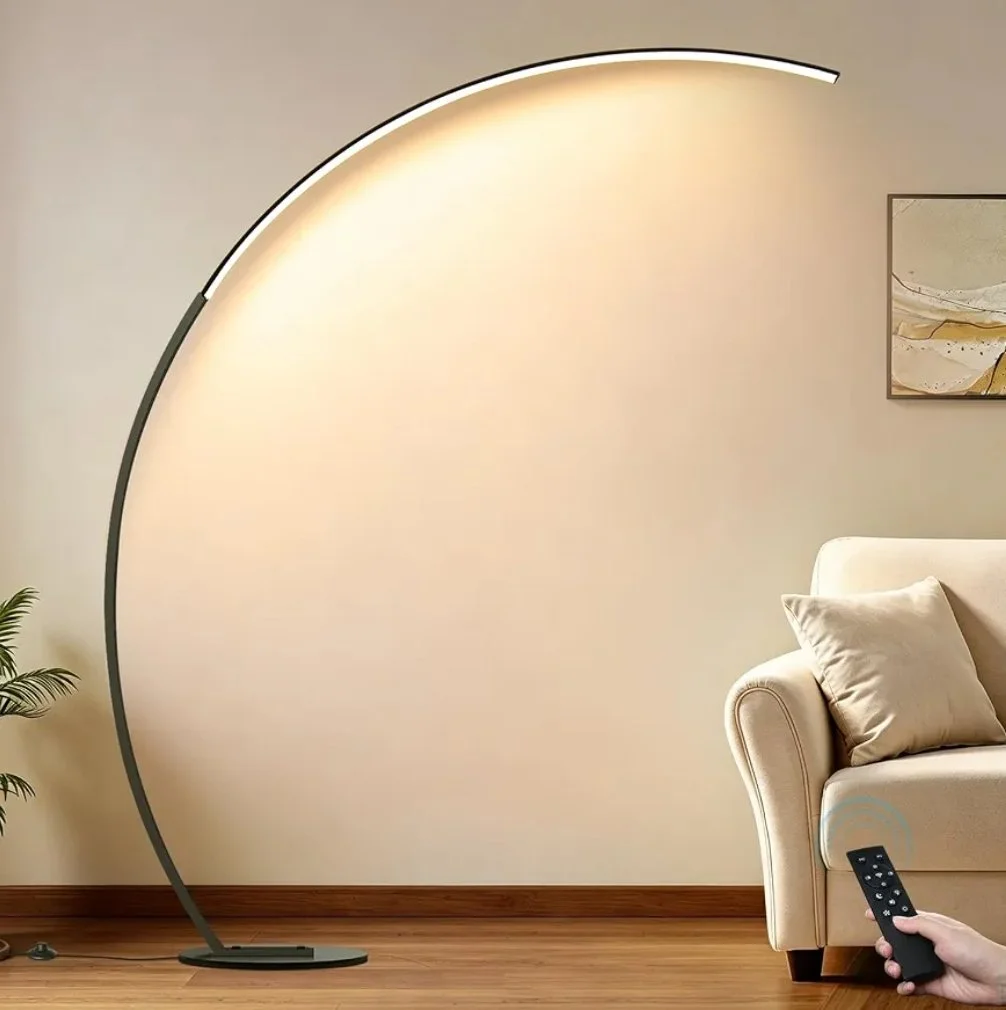
And then there’s the workhorse the whole category needs. A black arc floor lamp bending a long LED strip over the sofa, remote-controlled, dimmable, rated around 2,000 lumens, is ten times the light of the shadow pendants and roughly none of the personality. It reads a room. That’s the job. The mistake is asking it to also be the decor. Same mistake in reverse: asking the Tiffany dome to light the sofa. The two families divide the labor cleanly, one lamp to see by, one or two to look at, in most rooms. A floor lamp chosen for output plus a shadow piece chosen for its wall pattern covers both jobs for less than one designer piece trying to do everything.
Buy the working light for its lumens. Buy the second lamp at night. Failing that, at least imagine it at night, against the actual wall it will face. The tealight sconces in this set cost less than any bulb-holding lamp here, throw the only shadows that move. They will still be doing it when every LED driver in the room has died.