


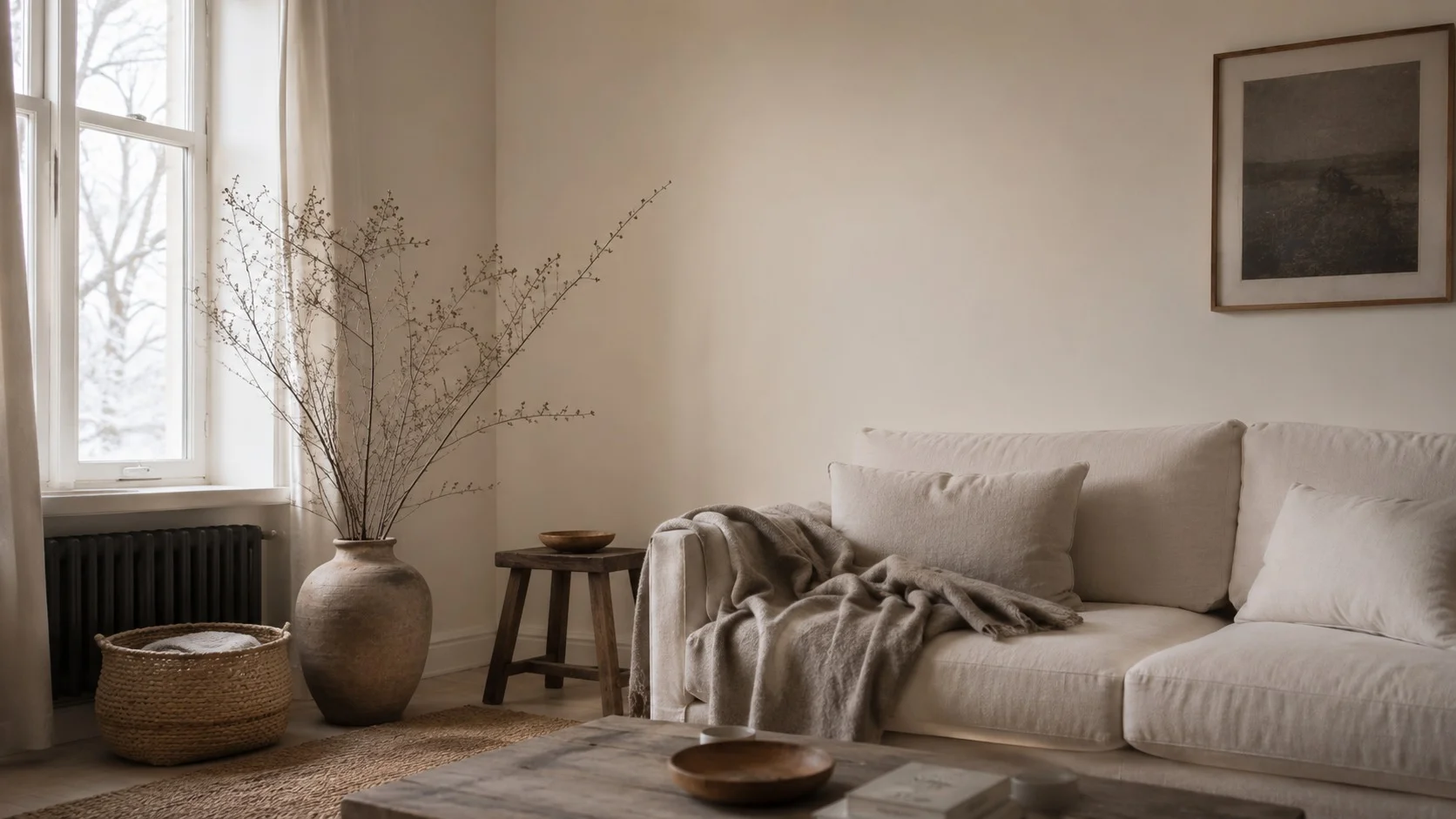
Warm whites have a reputation for turning on you. You test a swatch, it looks like a soft, elegant cream, you paint the room and by evening the walls have gone the color of old butter. Greek Villa is the warm white that mostly doesn’t do that and understanding why comes down to a couple of specific numbers and how they play against the light in an actual room. So rather than call it “versatile” and move on‚ here’s what it actually is‚ where it genuinely works and the two situations where even this well-behaved white can let you down․
The Numbers That Explain It’s Behavior
Two specs tell you almost everything about how Greek Villa will act on your wall.
It’s LRV, light reflectance value, is 84, on a scale where 0 is black and 100 is the whitest white. That’s high‚ which means it bounces a lot of light around and keeps a room feeling open and bright instead of closed in․ It reads clearly as a white‚ rather than a beige‚ despite the warmth․
It’s undertone is a subtle yellow-cream and the word doing the work there is subtle. This is the thing that separates Greek Villa from the warm whites that misbehave. It’s just warm enough to be soft‚ pleasant and not clinical‚ but not so warm that it tips into obvious yellow․ Structurally‚ it’s a standard titanium dioxide with a little yellow oxide․ It’s the touch of yellow that makes it stand out‚ and‚ for my money‚ the restraint of that yellow is the selling point․
Where it Genuinely Shines: North-facing And Low-warm-light Rooms
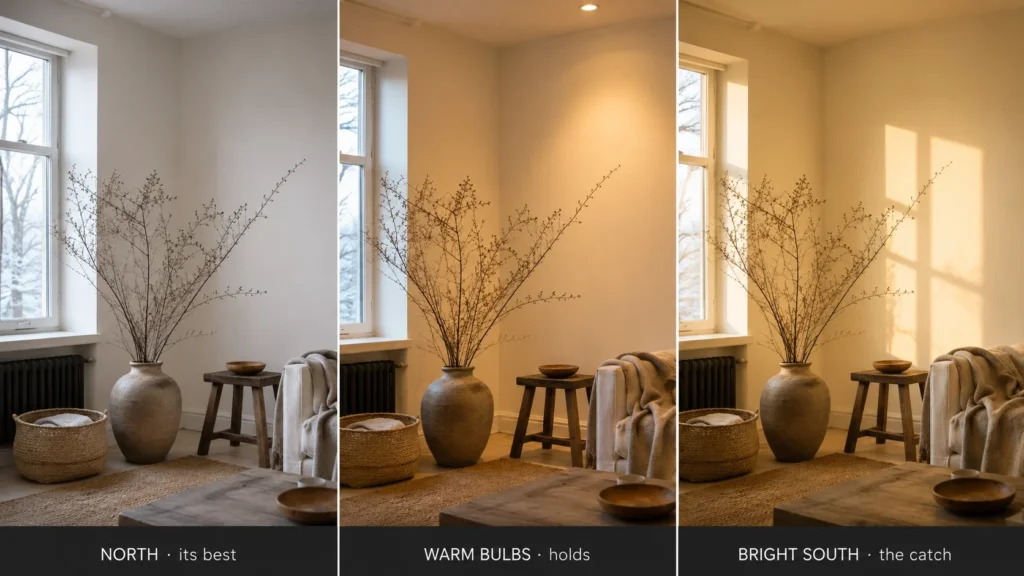
This is the situation that Greek Villa is practically made for‚ and it’s worth knowing how it works because it’s the opposite of what you would expect․
North rooms are always light‚ but the cool‚ gray light is not very cheerful or stimulating‚ which is why so many whites look grim in north light․ The slight yellow cast of the Greek Villa neutralizes the cool north light in the room‚ giving the room a nice comfortable feeling of warmth without the yellow dominating it․ Together the warm undertone of the wall color and the cool cast of the light make the wall appear clean‚ fresh‚ and white․ This is genuinely the best use case for the color and it’s where a lot of cooler whites fail.
The same logic applies to rooms lit mostly by warm artificial bulbs in the evening. Greek Villa leans a touch creamier under warm light but holds it’s composure and stays reading as white rather than going yellow, which is exactly the failure mode people fear from a warm white.
The One Setting To Be Careful In: Bright South-facing Sun
Here’s the honest catch, because no white is universally correct. In a bright‚ south-facing room that receives warm afternoon light‚ Greek Villa can be very warm and too creamy or yellowish․ It can look like the kind of creamy white that you’re trying to avoid by using a warm white instead․ But it’s still a beautiful color․
It’s not a dealbreaker, plenty of sunny rooms wear Greek Villa beautifully, but if your room gets punishing direct sun and you want the walls to stay crisp, this is the moment to test it hard against the light at different times of day or consider a more neutral white. Which brings up the comparisons people actually agonize over.
Greek Villa Versus The Whites People Confuse It With
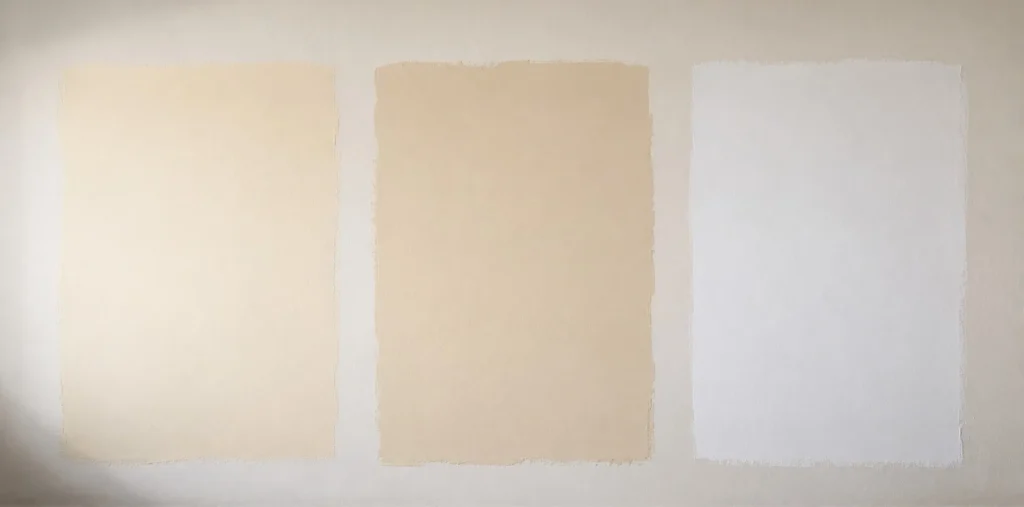
Two comparisons come up constantly and getting them straight saves a lot of sample-jar money.
Versus Alabaster (SW 7008)
This is the one people get backwards. The assumption is that Alabaster, being the famous soft white, is the more neutral choice. It isn’t. Alabaster has an LRV of 82, slightly lower and crucially it has noticeably more yellow than Greek Villa. Greek Villa is indeed technically brighter and more neutral‚ and has a slightly brighter cast in a room‚ whereas Alabaster is soft‚ creamy and muted․ For the softest brightest feel‚ go with Greek Villa․ I often like Alabaster if I want something a little softer and muted or in a darker room where the additional depth reads really well․
Versus Pure White (SW 7005)
These share nearly the same LRV, around 84, so they’re equally light, but they are not interchangeable. Pure White reads cool and near-neutral, the white that just looks like white. Greek Villa reads warm and creamy with real character. Side by side the difference is obvious. Pick Pure White when you want white to stay crisp and get out of the way; pick Greek Villa when you want the white itself to add warmth and softness to the room.
The Trim Mistake That Ruins It
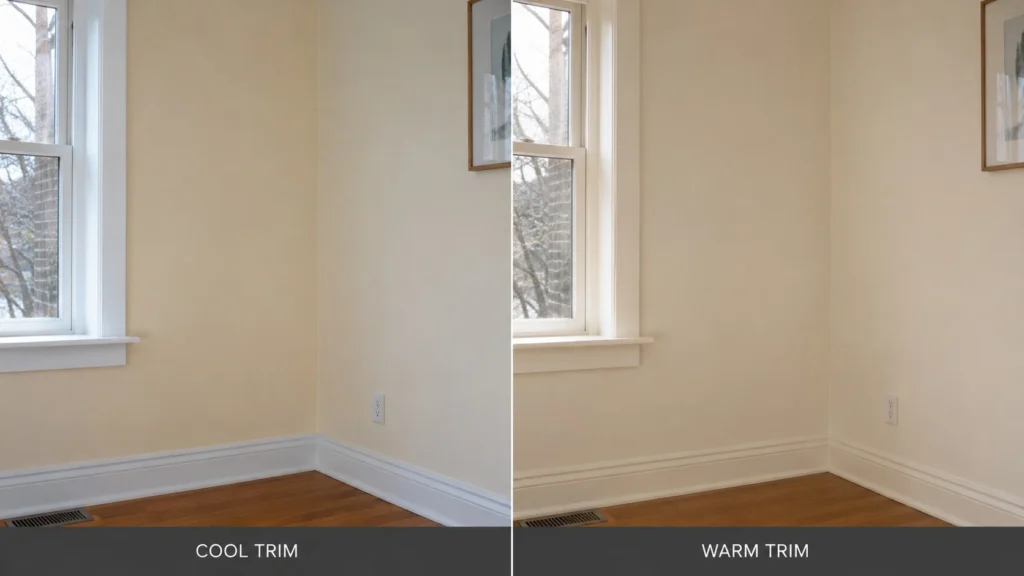
One specific pairing decision matters more than any other with this color and it’s the thing that trips people up. If you put a stark, cool blue-white trim, like Extra White, next to Greek Villa walls, the contrast makes the walls suddenly read distinctly yellow. The cool trim throws the wall’s warmth into sharp relief and undoes the whole balanced effect.
The fix is to trim it with a white that doesn’t fight the warmth. Pure White works well, giving crisp contrast without going cold and even Alabaster can work for a softer, layered look. Greek Villa also pairs cleanly with warm greys, it makes a good trim color against something like Agreeable Gray, for instance. The principle is simple: keep the trim in the warm-to-neutral family and never let a cold blue-white sit against these walls unless you specifically want the room to look yellow.
The reason Greek Villa has stayed on so many designer shortlists isn’t that it’s a magic white that works everywhere, no white is. It’s that it’s a warm white with unusually good manners: bright enough to open a room‚ warm enough to feel inviting and restrained enough that it rarely embarrasses you the way lesser warm whites do․ It does need to be paired with a north-facing room or one with low light‚ and it’s important that you trim it out in something warm․ Test it on your wall across a full day first‚ because the one universal truth about white paint is that it will look different in your home than in anyone else’s․