


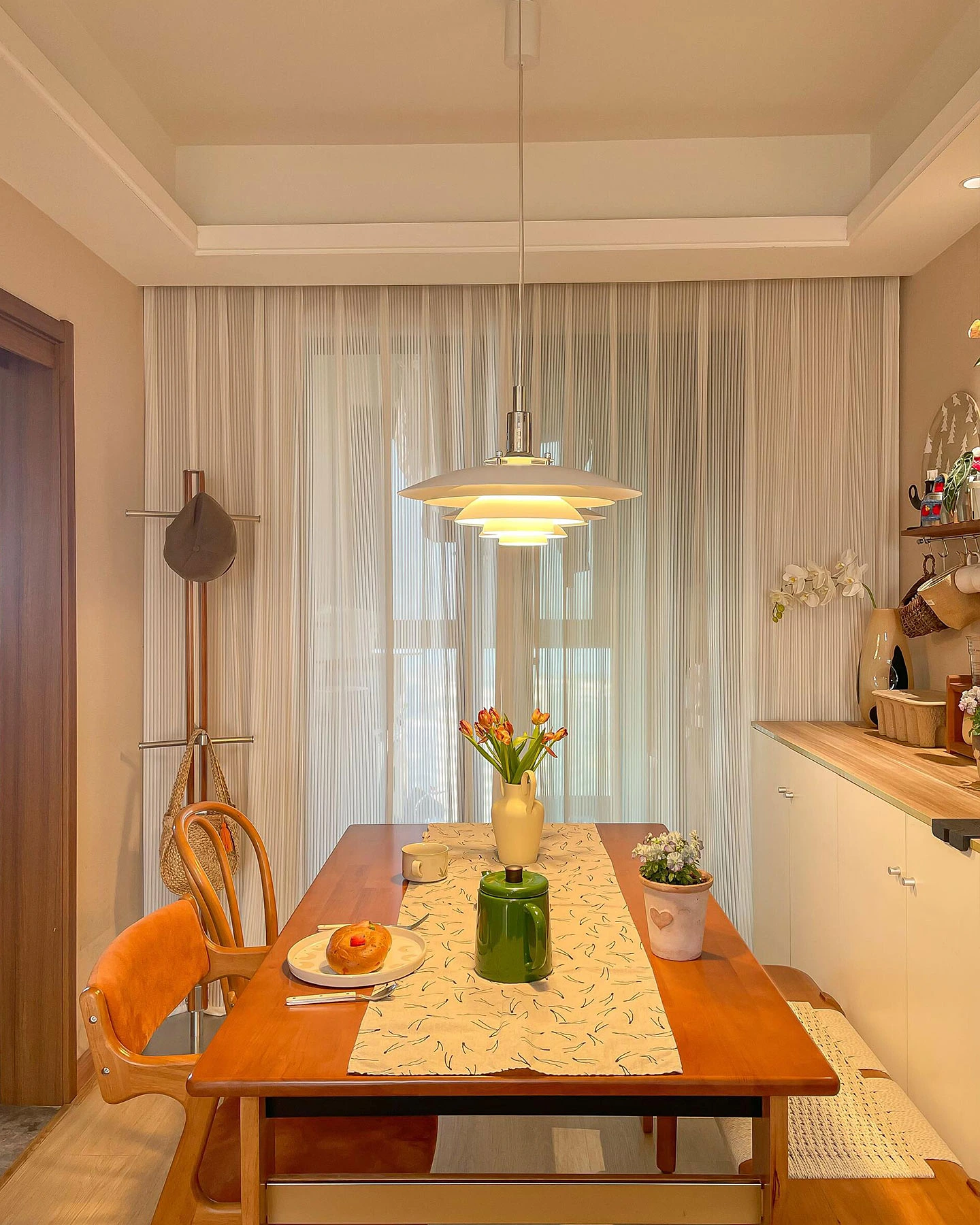
A dining room of 10 by 14 feet adds up to 24, and lighting shops turn that number straight into inches, so the room would suit a fixture about 24 inches across. Visual Comfort and Ballard Designs both give this little sum in their buying guides, and it makes a handy starting point before anyone looks at styles or finishes. The table under the light matters even more than the room, though, because the fixture is there to light the plates and the faces around them. Once the table has been measured, the style, the size, the hanging height and the bulbs can all be picked to suit it.
Fixture Styles That Match The Shape Of The Table
The table should guide the style far more than the trend of the moment does. A fixture that echoes the Coffee Table shape tends to look as though it was planned for the room, even in a house where nothing else matches.
Chandeliers For Round And Square Tables
Round chandeliers, drum shades and sputnik style fixtures all sit naturally over a round or square table, because their light spreads evenly to every chair. Traditional homes often take a candle style chandelier with arms, while a plain drum or a cluster of glass globes will suit a newer house.
Linear Fixtures And Rows Of Pendants For Long Tables
A long rectangular table looks better under a linear fixture or a row of two or three pendants. One round chandelier in the middle of a long table tends to leave both ends dim, so the people sitting there end up eating in shadow.
Flush And Semi Flush Mounts For Low Ceilings
On a ceiling lower than 8 feet, a hanging chandelier may leave too little headroom, so a flush or semi flush fixture is the safer choice. These sit close to the ceiling and still light the table, provided the table is placed directly under them.
Fixture Size Comes From The Table Width And The Room
For a fixture over a table, most designers start with the table’s width. The usual guideline is a fixture between one half and two thirds as wide as the table, so it covers the middle without hanging out over the plates. Lights.com sets out the sizes this gives for common tables:
- A 36 inch round table suits a fixture of 18 to 24 inches.
- A 48 inch round or square table suits a fixture of 24 to 32 inches.
- A 72 inch rectangular table suits a round fixture of 36 to 48 inches, or a linear one 24 to 48 inches long.
The room sum from the start of this guide then works as a second check. When the table figure and the room figure disagree, go with the table, since that is where the light needs to fall.
Hanging Height Rises With The Ceiling
On a standard 8 foot ceiling, most lighting guides, Wayfair’s among them, hang the bottom of the fixture 30 to 36 inches above the tabletop. Taller rooms need an adjustment, and the usual advice is to add about 3 inches of height for every extra foot of ceiling, which puts the fixture roughly 36 to 42 inches above the table under a 10 foot ceiling. Hung any lower, the light gets in the way of people talking across the table, while a fixture hung much higher throws glare into the eyes of anyone sitting down. A quick test is to sit at the table and look across at the chair opposite. If the fixture blocks the face of the person sitting there, the chain or rod should be shortened before the electrician leaves.
Warm, True And Dimmable Bulbs Work Best
Even a well chosen fixture can look harsh with the wrong bulbs in it, so the bulbs deserve as much thought as the shade.
Color Temperature
Warm white bulbs rated around 2700K give food and faces the soft yellow glow most people expect at dinner. Many designers accept up to 3000K, but cooler bulbs of 4000K and above tend to make a dining room look like an office kitchen.
Color Rendering
The CRI rating on the box shows how true colors appear under the bulb. A CRI of 90 or higher keeps red sauces, green salads and skin tones looking natural, whereas cheaper bulbs in the low 80s can make the same meal look dull.
Brightness And Dimming
Guides from lighting retailers suggest roughly 30 to 40 lumens per square foot of dining room, which comes to about 3,000 to 4,000 lumens for an average room. That level suits a family dinner or homework at the table, yet it is far too bright for a late meal with friends. A dimmer switch solves this, provided the bulbs are labeled dimmable and the dimmer is rated for LED loads.
Before ordering bulbs, take one out of the fixture and look at its base. Many chandeliers use the small E12 candelabra socket rather than the standard E26 size found in most lamps, and a pack of the wrong base will not fit.